Introduction
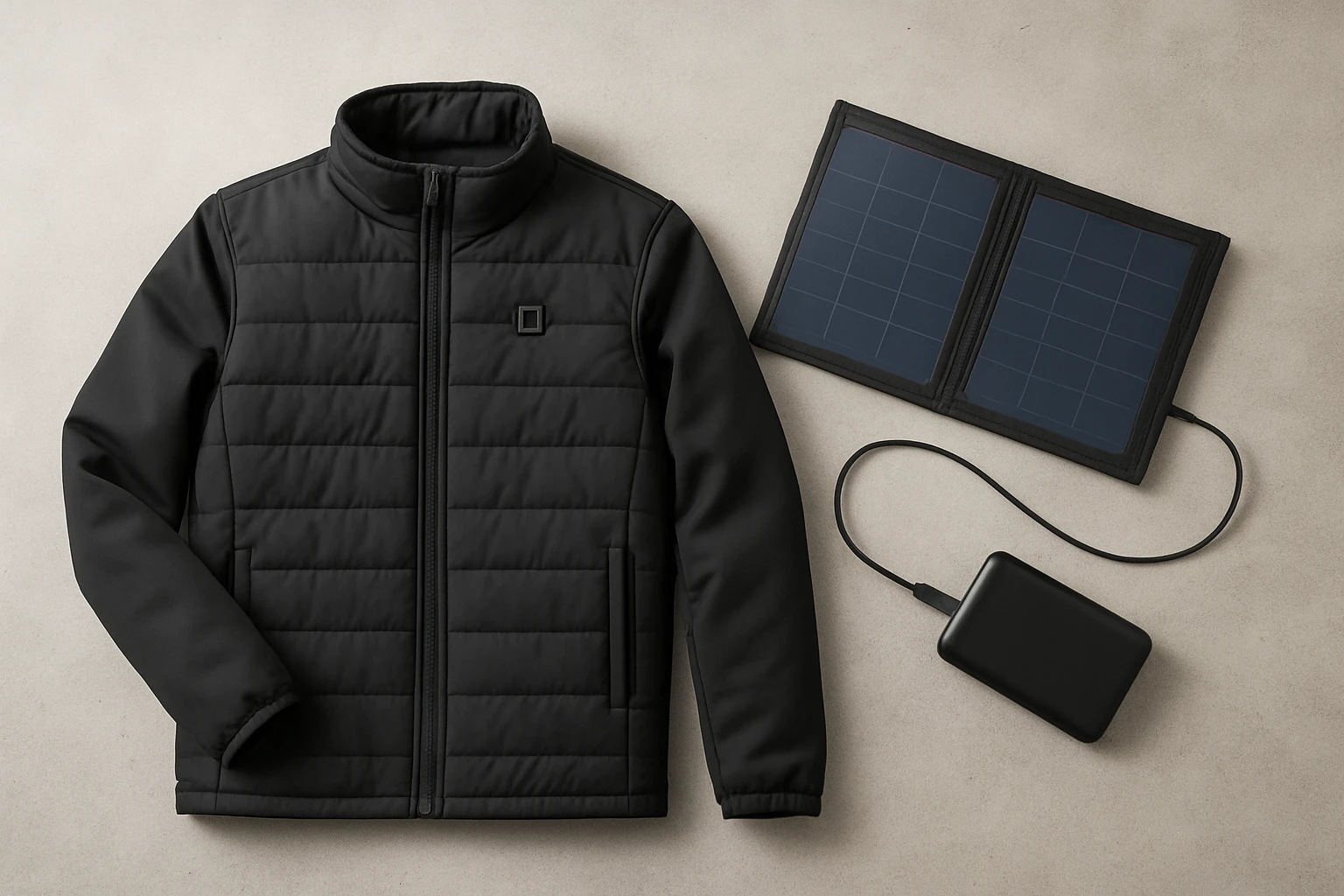
This guide examines solar charging solutions that keep heated clothing functional during extended outdoor activities. Readers will learn essential concepts, evaluate three recommended products, and receive actionable tips for reliable power management. The article balances technical background with practical recommendations, ensuring value for both novice and experienced adventurers. By the end of the guide, one will be equipped to select and use solar chargers that match specific heating needs.
Background/Context
Heated garments rely on low‑voltage battery packs that generate warmth through resistive heating elements. These batteries typically operate between 5 V and 12 V, requiring regular recharging to maintain comfort in cold environments. Solar energy offers a renewable method to replenish power when grid electricity is unavailable, especially in remote locations such as backcountry camps or winter festivals. Understanding solar panel efficiency, battery capacity, and charging protocols is essential for integrating solar power with heated apparel.
Choosing the Right Solar Charger for Heated Clothing
When selecting a solar charger, three criteria dominate the decision‑making process: capacity measured in milliamp‑hours (mAh) or watt‑hours (Wh), output power in watts, and compatibility with the heating garment’s charging port. A higher capacity ensures multiple recharges before the solar panel must replenish the bank, while greater output power reduces charging time. Compatibility includes USB‑C, USB‑A, and Qi wireless standards, all of which are common on modern heated jackets and gloves.
Three products meet these criteria and are highlighted throughout this guide. The first mention of each product uses a friendly name linked to its Amazon page.
Portable Power Banks for On‑the‑Go Heating
The Sudrov Solar Power Bank provides 42,800 mAh capacity with four output ports, including a 15 W fast‑charge USB‑C port and Qi wireless charging. Its built‑in cables (Type‑C, iOS, Micro‑USB) eliminate the need for additional wires, a feature that simplifies charging heated gloves that often use proprietary connectors. The integrated LED flashlight, carabiner, and waterproof silicone housing make it suitable for rugged winter excursions.
Key specifications include a 15 W fast‑charging capability, support for up to six devices simultaneously, and an intelligent protection IC that safeguards heating elements from over‑voltage. At a price of $39.99 and a rating of 4.6/5 from 117 reviews, it offers strong value for short‑duration trips where weight and portability are paramount.
The Hiluckey Solar Charger delivers 25,000 mAh capacity and features four high‑efficiency solar panels that claim up to ten times the output of standard single‑panel chargers. It supports QC 3.0 fast charging at 5 V/3 A, enabling rapid replenishment of heated clothing batteries when sunlight is abundant. The device includes a USB‑C input/output port and two USB‑A ports, allowing simultaneous charging of a heated jacket and a smartphone.
Although its capacity is lower than the Sudrov model, the Hiluckey charger excels in solar efficiency and includes a powerful 135‑foot flashlight, making it an attractive option for hikers who rely on solar power as the primary energy source. Priced at $29.99 with a 4.2/5 rating from 355 reviews, it balances cost and performance for budget‑conscious users.
High‑Capacity Power Stations for Extended Adventures
For multi‑day expeditions or situations where multiple heated garments and auxiliary devices must run concurrently, the Anker SOLIX C300 Power Station offers 288 Wh (approximately 75,000 mAh at 3.8 V) with a 300 W inverter. Its LiFePO4 battery chemistry provides a three‑year guarantee and superior cycle life compared with traditional lithium‑ion cells.
The station includes two 140 W USB‑C ports, a 120 W car socket, and additional USB‑A ports, enabling simultaneous charging of heated jackets, portable heaters, and communication equipment. Solar recharging is supported via a 100 W solar panel, allowing the unit to recover energy during daylight hours. At $169.99 and a 4.6/5 rating from 1,481 reviews, the SOLIX C300 represents a premium solution for users who prioritize endurance over compactness.
Comparison and Selection Guide
| Feature | Sudrov Solar Power Bank | Hiluckey Solar Charger | Anker SOLIX C300 Power Station |
|---|---|---|---|
| Capacity (mAh / Wh) | 42,800 mAh (~155 Wh) | 25,000 mAh (~92 Wh) | 75,000 mAh (~288 Wh) |
| Fast‑Charge Output | 15 W USB‑C, QC 3.0 | QC 3.0 5 V/3 A | 140 W USB‑C (PD 3.1), 120 W car socket |
| Wireless Charging | Yes (Qi) | No | No |
| Solar Input Power | Built‑in panels (unspecified) | Four high‑efficiency panels (up to 10× standard) | External 100 W panel (optional) |
| Weight | ~0.6 kg | ~0.5 kg | ~3.2 kg |
| Price (USD) | $39.99 | $29.99 | $169.99 |
| Rating | 4.6/5 (117 reviews) | 4.2/5 (355 reviews) | 4.6/5 (1,481 reviews) |
Users should match their adventure length, device load, and budget to the appropriate tier. For day hikes lasting less than eight hours, the Sudrov or Hiluckey models provide sufficient energy while maintaining a lightweight profile. For week‑long backcountry treks or off‑grid work sites, the Anker SOLIX C300 delivers the endurance required to keep multiple heated garments and ancillary electronics operational.
Best Practices & Tips
- Position solar panels at a 45‑degree angle toward the sun to maximize photon absorption.
- Clean panel surfaces regularly; dust and snow significantly reduce output.
- Use the built‑in fast‑charge ports whenever possible to reduce downtime for heated clothing batteries.
- Store power banks in a insulated pouch when not in use to preserve charge in sub‑zero temperatures.
- Monitor battery health with companion apps (e.g., Anker’s app) to avoid unexpected power loss.
- When using a power station, connect high‑draw devices (such as heated jackets with multiple heating zones) to the 140 W USB‑C ports rather than the lower‑power USB‑A ports.
Frequently Asked Questions
- Can solar chargers power heated jackets directly?
- Most heated garments require a DC input of 5 V to 12 V. Solar chargers that provide USB‑C or USB‑A output can connect via the jacket’s charging cable, but an intermediate power bank or power station often smooths voltage fluctuations.
- How long does it take to fully charge a 42,800 mAh power bank using solar power?
- Charging time depends on sunlight intensity; under optimal conditions (≈800 lux), the Sudrov Power Bank may require 8‑10 hours to reach full capacity.
- Is wireless charging practical for heated clothing?
- Wireless Qi charging is convenient for small devices such as phone‑sized controllers, but most heated jackets use wired connections for higher current. The Sudrov model includes Qi output for supplemental devices.
- What safety features protect heated garments from over‑charging?
- All three featured products incorporate intelligent protection ICs that monitor voltage, current, and temperature, automatically terminating charge if unsafe conditions are detected.
- Can I combine solar input with AC or car charger input?
- Yes. The Anker SOLIX C300 supports simultaneous solar and AC/car charging, allowing the battery to top up while powering devices.
Conclusion
Solar charging solutions empower outdoor enthusiasts to maintain warmth from heated clothing without reliance on conventional power sources. By understanding capacity, output power, and solar efficiency, users can select a device that aligns with the duration and intensity of their activities. The Sudrov Solar Power Bank, Hiluckey Solar Charger, and Anker SOLIX C300 Power Station each address distinct scenarios, from lightweight day trips to extended off‑grid expeditions. Implementing the best‑practice tips outlined in this guide will further ensure reliable performance and prolonged comfort in cold environments.
Products Featured in This Guide
Sudrov Solar Power Bank
Price: $39.99 | Rating: 4.6/5 (117 reviews)
Featured for its high 42,800 mAh capacity, built‑in cables, Qi wireless charging, and rugged design ideal for short‑duration outdoor heating needs.
Anker SOLIX C300 Power Station
Price: $169.99 | Rating: 4.6/5 (1,481 reviews)
Featured for its 288 Wh LiFePO4 battery, 300 W output, multiple high‑power ports, and solar‑recharge capability suitable for extended multi‑device heating scenarios.
Hiluckey Solar Charger
Price: $29.99 | Rating: 4.2/5 (355 reviews)
Featured for its four high‑efficiency solar panels, QC 3.0 fast charging, and compact form factor that excels in budget‑friendly, solar‑first charging strategies.