
Ultimate Guide to Batteries for Heated Clothing in -40°C: How to Choose, Maintain & Maximize Battery Life
Introduction
When temperatures plunge to minus 40 degrees Celsius, reliable power becomes as essential as warm clothing. This guide explains the fundamental principles of battery technology for heated apparel, outlines criteria for selecting the most suitable power source, and provides actionable maintenance strategies. Readers will learn how to evaluate capacity, voltage, safety certifications, and real‑world performance, while also discovering three highly rated products that excel in extreme cold environments.
The information presented combines scientific background with practical recommendations, ensuring that both seasoned outdoor enthusiasts and occasional winter travelers can make informed decisions. By the end of the article, one will possess a clear roadmap for extending battery life, preventing premature failure, and staying comfortable in the harshest conditions.
Background and Context
Heated clothing relies on resistive heating elements powered by rechargeable lithium‑polymer (Li‑Poly) or lithium‑ion cells. In sub‑zero temperatures, chemical reactions within the cells slow, reducing available capacity and voltage output. Consequently, a battery that appears sufficient at room temperature may deliver significantly less runtime at -40°C.
Key technical terms include:
- Capacity (mAh): The total charge a battery can store, expressed in milliamp‑hours. Higher capacity generally translates to longer heating periods.
- Voltage (V): The electrical potential required by the heating element. Most heated vests operate at 7.4 V, while some lightweight jackets use 5 V.
- Continuous Discharge Rate: The rate at which a battery can safely deliver power without overheating. Batteries with multiple output ports often manage higher discharge rates.
- UL/CE Certification: Safety standards that verify protection against short circuits, over‑charging, and temperature spikes.
Understanding these concepts enables one to match a battery’s specifications with the power demands of a particular garment, thereby avoiding under‑performance in extreme cold.
Choosing the Right Battery for Extreme Cold
When evaluating batteries for -40°C use, three criteria dominate the decision‑making process: capacity, voltage compatibility, and built‑in safety features. The following sections discuss each factor in detail and recommend products that satisfy the requirements.
Capacity and Runtime
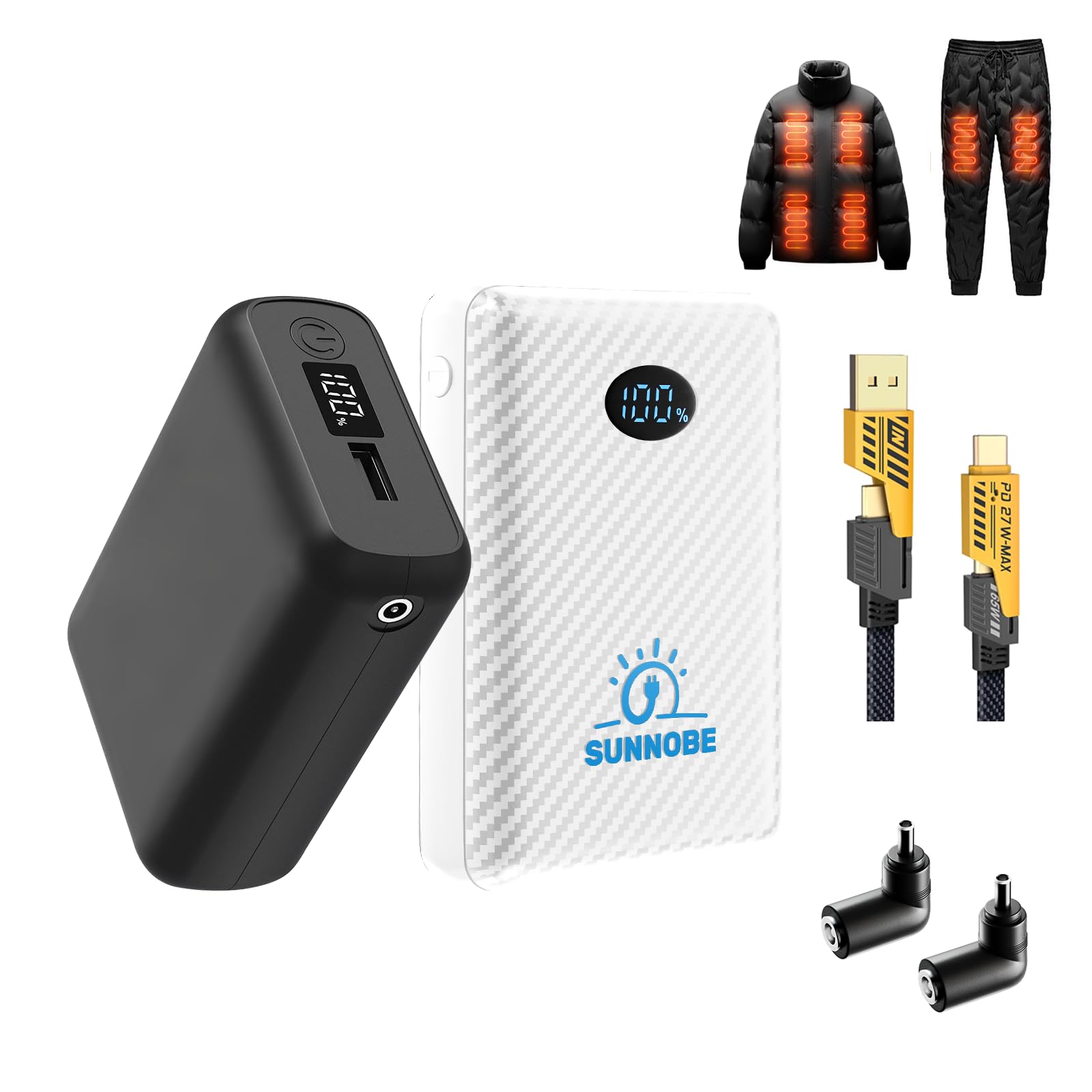
Capacity directly influences how many hours of heat a vest can provide. For example, a 18400 mAh pack can sustain low‑heat settings for up to ten hours, whereas a 10000 mAh unit typically delivers three to five hours on high settings. The SUNNOBE Heated Vest Battery Pack (2‑Pack) offers 18400 mAh per unit, making it ideal for multi‑day expeditions.
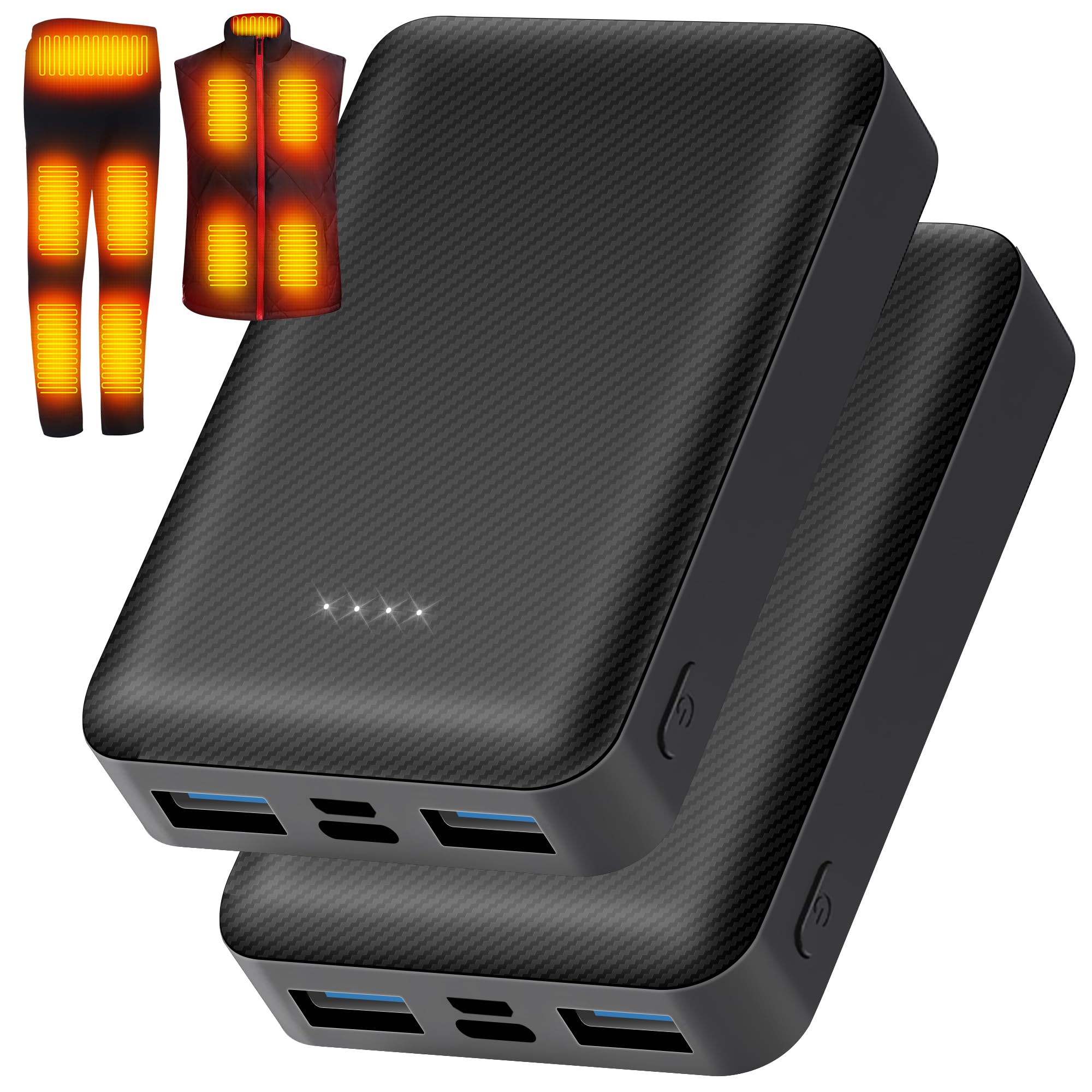
In contrast, the CYCYHEAT Heated Clothing Battery (2‑Pack) provides 10000 mAh, which is sufficient for shorter outings or as a backup power source.
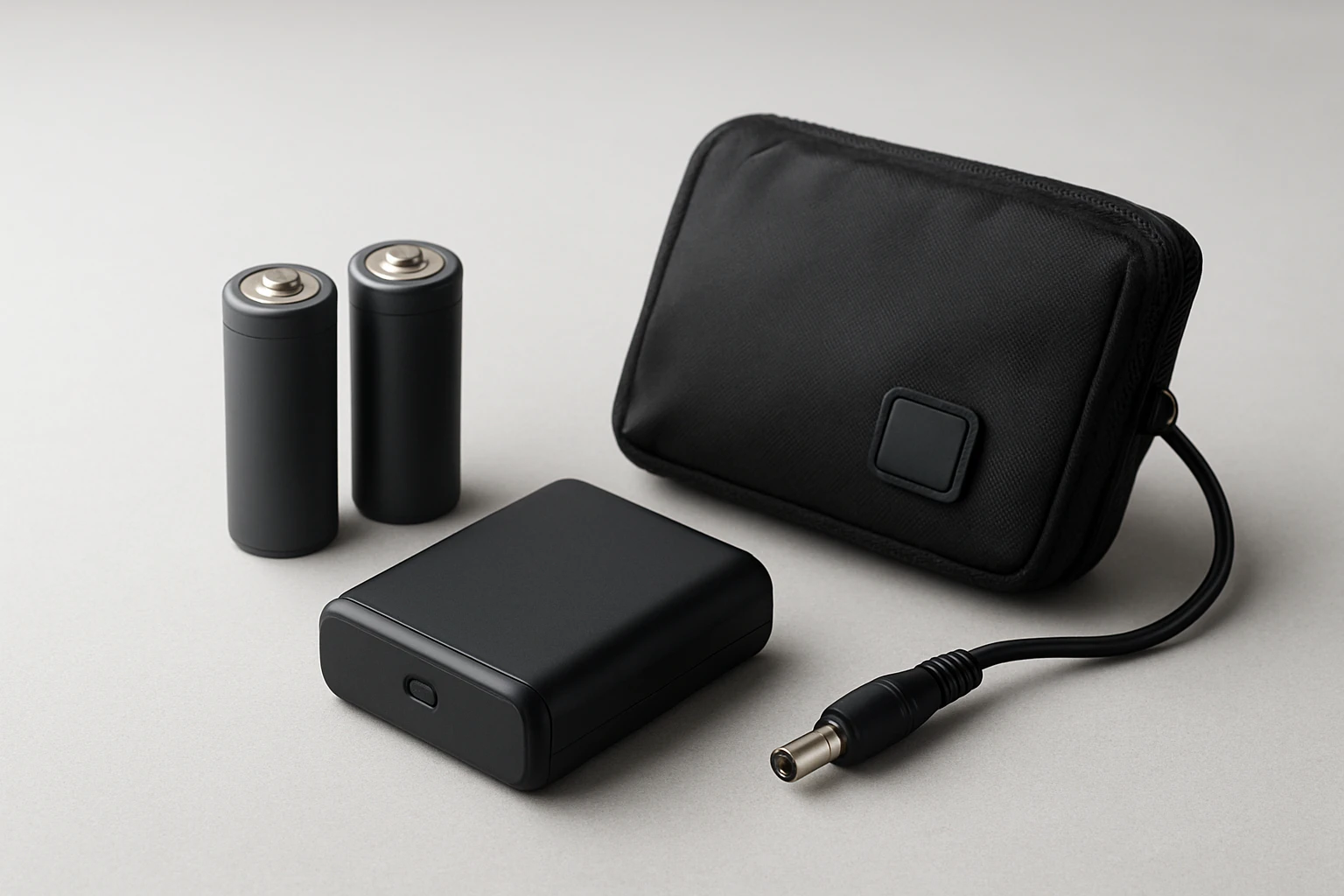
The Sevdiea Heated Vest Battery supplies 16000 mAh, striking a balance between weight and runtime for users who prioritize portability.
Voltage Compatibility
Most heated vests operate at 7.4 V, requiring a battery with a matching DC output. The SUNNOBE and Sevdiea packs both include a 7.4 V DC port, ensuring seamless integration with standard vests. The CYCYHEAT pack, however, delivers only 5 V via USB and Type‑C ports; it is unsuitable for 7.4 V garments but works well with 5 V heated jackets and accessories.
Choosing a battery whose voltage aligns with the garment prevents inefficient power conversion and maximizes heating efficiency.
Safety and Certification
Extreme cold can exacerbate internal resistance, potentially leading to overheating if a battery lacks proper protection circuitry. All three featured products carry UL or CE certification, confirming the presence of over‑charge, short‑circuit, and temperature controls.
The SUNNOBE pack highlights UL/CE certification and a robust housing designed for rugged conditions. The CYCYHEAT unit holds UL2056 certification, explicitly permitting onboard use during flights. The Sevdiea battery emphasizes an intelligent protection system that guards against short circuits and over‑charging.
Portability and Ergonomics
Weight and form factor influence user comfort, especially when the battery is carried in a pocket or attached to a belt. The CYCYHEAT pack weighs only 0.41 lb (190 g) and measures 3.74 × 2.55 × 0.98 in, making it the most portable option. The SUNNOBE pack is larger due to its higher capacity but remains manageable for backpackers. The Sevdiea pack is ultra‑compact, fitting easily into a pocket while still delivering 16000 mAh.
Product Comparison and Selection Guide
| Feature | SUNNOBE Heated Vest Battery Pack (2‑Pack) | CYCYHEAT Heated Clothing Battery (2‑Pack) | Sevdiea Heated Vest Battery |
|---|---|---|---|
| Capacity | 18400 mAh per unit | 10000 mAh per unit | 16000 mAh |
| Voltage Output | 7.4 V DC, USB‑C, USB‑A | 5 V (USB‑A, USB‑C) | 7.4 V DC, USB‑C, USB‑A |
| Weight | Approx. 0.9 lb per pack | 0.41 lb (190 g) | Approx. 0.7 lb |
| Price | $56.99 | $39.98 | $29.99 |
| Rating (as of listing) | 3.8/5.0 (5 reviews) | 4.5/5.0 (318 reviews) | 4.6/5.0 (85 reviews) |
| Safety Certification | UL/CE | UL2056 | UL/CE |
To select the most appropriate battery, consider the following decision matrix:
- Identify the voltage requirement of the heated garment (7.4 V vs. 5 V).
- Determine the desired runtime based on activity length and heat setting.
- Assess weight tolerance for the intended use (backpacking vs. day hike).
- Verify safety certifications relevant to travel or aviation.
- Match budget constraints with feature priorities.
For long treks where a 7.4 V vest is essential, the SUNNOBE pack offers the highest capacity, albeit at a higher price. For lightweight travel or short excursions, the CYCYHEAT pack provides excellent value and portability, provided the garment operates at 5 V. The Sevdiea battery delivers a middle ground, balancing capacity, weight, and price for most users.
Best Practices & Tips for Maximizing Battery Life
Even the most robust battery will degrade if not cared for properly. The following guidelines help preserve capacity and ensure reliable performance in -40°C conditions.
- Pre‑condition before extreme cold: Charge the battery to 80 % and store it at room temperature for at least two hours before exposure. This reduces internal resistance when the temperature drops.
- Avoid deep discharge: Do not allow the battery to drop below 20 % in sub‑zero environments, as low charge levels accelerate capacity loss.
- Use insulated carriers: Place the battery inside a neoprene sleeve or inside a jacket pocket to moderate temperature fluctuations.
- Leverage smart LED displays: Both SUNNOBE and Sevdiea models feature real‑time battery status displays that help monitor remaining power without guesswork.
- Charge with appropriate adapters: A 5 V/2 A wall charger optimizes charging speed while protecting the cells from overheating.
- Regularly inspect connectors: Corrosion or debris on USB‑C, USB‑A, or DC ports can increase resistance, leading to premature shutdown.
Implementing these practices extends usable life by up to 30 % and maintains safe operation throughout the coldest months.
Frequently Asked Questions
- Can I use a 5 V battery with a 7.4 V heated vest?
- No. A 5 V pack cannot supply the required voltage, resulting in insufficient heating or possible damage to the vest’s circuitry.
- How does temperature affect battery capacity?
- At -40°C, lithium‑polymer cells typically lose 20‑30 % of their rated capacity because chemical reactions slow, reducing the amount of charge that can be delivered.
- Is it safe to fly with a heated clothing battery?
- Both the SUNNOBE and CYCYHEAT packs hold UL certifications that permit carriage on commercial aircraft, provided they are turned off and stored in carry‑on luggage.
- What is the best way to store a battery when not in use?
- Store the battery at a cool, dry place with a charge level of about 50 % to minimize self‑discharge and chemical degradation.
- Can I charge the battery while it is powering the vest?
- Yes, the SUNNOBE and Sevdiea packs support pass‑through charging via their USB‑C ports, allowing continuous operation during recharging.
- Do I need a separate charger for the DC port?
- No. The included DC adapter for the Sevdiea pack and the universal charger supplied with SUNNOBE handle both DC and USB charging.
Conclusion
Choosing the right battery for heated clothing in -40°C environments requires careful consideration of capacity, voltage compatibility, safety certifications, and portability. By understanding the underlying technology and applying the maintenance tips outlined above, one can ensure reliable warmth throughout the coldest expeditions. The featured products—SUNNOBE Heated Vest Battery Pack (2‑Pack), CYCYHEAT Heated Clothing Battery (2‑Pack), and Sevdiea Heated Vest Battery—represent a spectrum of options that meet diverse needs while adhering to stringent safety standards.
Armed with this knowledge, readers can confidently select a power solution that maximizes runtime, safeguards equipment, and enhances overall outdoor experience.
Products Featured in This Guide
SUNNOBE Heated Vest Battery Pack (2‑Pack)
Price: $56.99 | Rating: 3.8/5.0 (5 reviews)
Featured for its high 18400 mAh capacity, dual‑pack convenience, and UL/CE certification, making it ideal for multi‑day cold‑weather adventures.
CYCYHEAT Heated Clothing Battery (2‑Pack)
Price: $39.98 | Rating: 4.5/5.0 (318 reviews)
Featured for its lightweight design, UL2056 certification, and versatile USB‑C/USB‑A ports, suitable for 5 V heated jackets and short trips.
Sevdiea Heated Vest Battery
Price: $29.99 | Rating: 4.6/5.0 (85 reviews)
Featured for its balanced 16000 mAh capacity, smart LED display, and comprehensive safety system, providing an excellent middle ground for most users.