
Introduction
Designing heated clothing for women demands a nuanced understanding of thermal technology, ergonomic fit, and material science. Readers will learn the foundational principles of heat generation, how to allocate heat zones for maximum comfort, and the steps required to select fabrics that retain warmth without sacrificing style. This guide also highlights two exemplary products—the KOVNLO Heated Vest and the WASOTO Heated Jacket—to illustrate practical applications of the concepts discussed.
By the end of the article, designers, retailers, and informed consumers will possess a clear roadmap for creating or selecting heated garments that perform reliably in cold environments while maintaining a flattering silhouette. The guide balances theoretical depth with actionable product recommendations, ensuring value for readers regardless of purchasing intent.
Background and Context
Heated apparel integrates electrical heating elements, power sources, and control systems into traditional clothing structures. The most common heating technologies include carbon fiber panels, nickel‑chrome wires, and flexible polymer heaters. Each technology offers distinct trade‑offs in terms of heat output, durability, and power consumption.
Power is typically supplied by rechargeable lithium‑ion battery packs ranging from 5000 mAh to 20000 mAh. Higher capacity packs extend heating duration but increase weight, influencing garment ergonomics. Smart controllers allow users to select temperature levels, often indicated by LED lights, and some models feature automatic shut‑off to conserve battery life.
Consumer expectations have shifted toward lightweight, water‑resistant designs that blend seamlessly with everyday fashion. Consequently, designers must consider not only thermal performance but also aesthetic integration, washability, and compliance with safety standards such as UL 60950‑1 for electronic textiles.
Understanding Heated Clothing Technology
Effective heated garments begin with a reliable heating element. Carbon fiber panels are prized for their thin profile and even heat distribution, making them ideal for jackets and vests where discreet placement is essential. Nickel‑chrome wires generate higher temperatures quickly but are bulkier, suitable for outer shells that can accommodate thicker layers.
Control circuitry governs power flow to the heating elements. Modern controllers feature multiple heat settings, often three to five levels, and may include a "lights‑out" mode that disables indicator LEDs for stealthy use. The KOVNLO Heated Vest exemplifies this approach with a smart controller that offers lights‑out functionality, enhancing both battery life and user discretion.
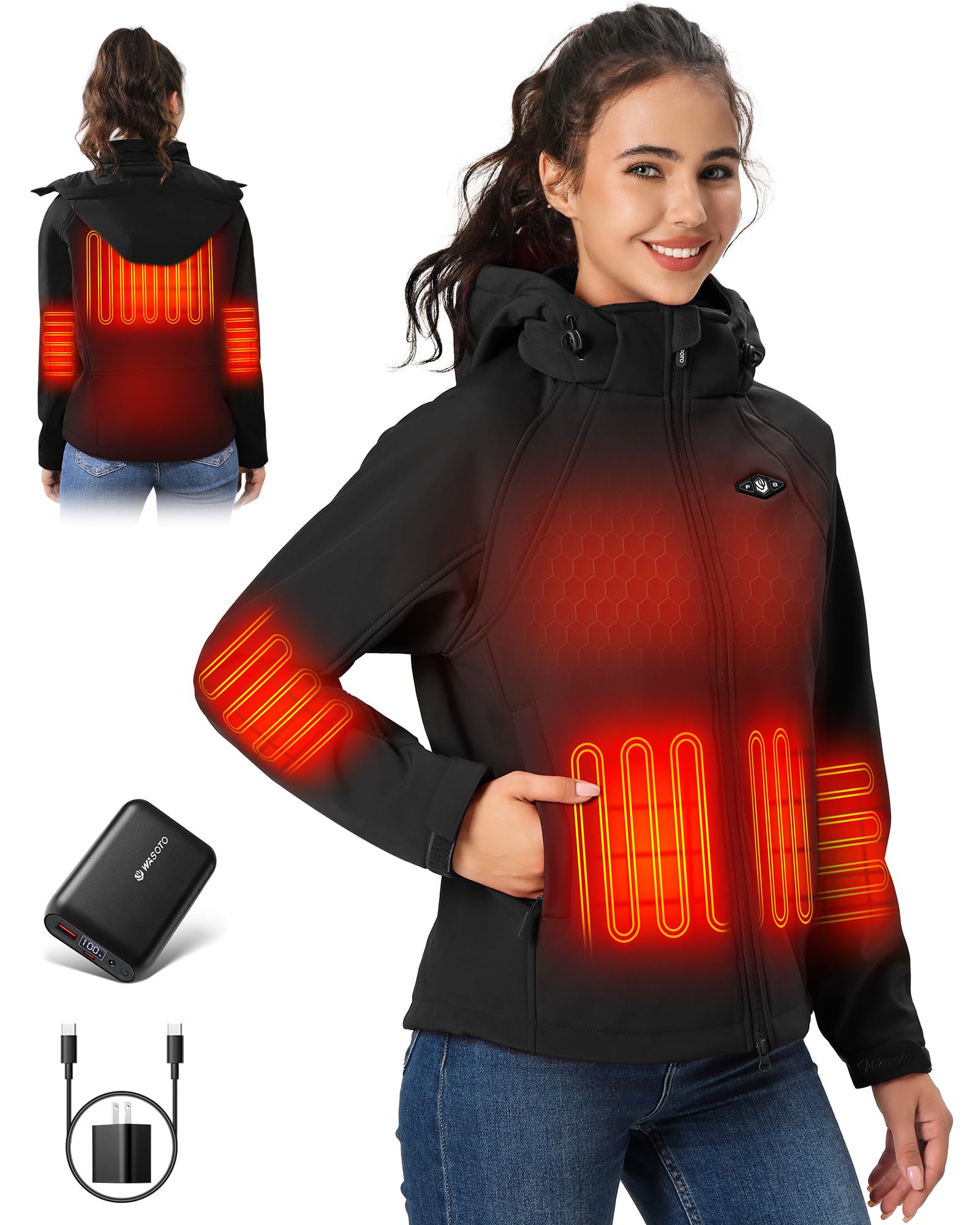
Battery selection directly impacts runtime. A 10000 mAh pack typically provides 6‑8 hours of low‑heat operation, while a 18400 mAh pack, as found in the WASOTO Heated Jacket, can sustain high‑heat settings for up to 10 hours. Designers must balance capacity against weight to avoid compromising comfort.
Designing for Fit and Mobility
Women’s apparel often emphasizes contouring silhouettes, which can clash with the rigid nature of heating components. To preserve mobility, designers should route heating elements along natural seams and avoid high‑stress zones such as the underarm and shoulder pivots. Flexible printed circuit boards (PCBs) can be laminated into fabric panels, allowing the garment to stretch without damaging the electronics.
Adjustable features—such as drawstrings, elastic cuffs, and articulated sleeves—enhance fit while accommodating the bulk of a battery pack. The WASOTO Heated Jacket incorporates a detachable hood and a slim‑fit cut, demonstrating how thoughtful tailoring can integrate heating technology without sacrificing style.
When selecting fabrics, prioritize those with inherent stretch and moisture‑wicking properties. A blend of polyester and spandex offers elasticity, while a softshell outer layer provides wind resistance. Layering a thin, insulated liner beneath the heating panel can trap warmth and reduce the required heat output, extending battery life.
Testing prototypes on a range of body types is essential. Use fit models representing diverse heights, bust sizes, and torso lengths to ensure the heating zones align with key anatomical regions such as the chest, back, and lower abdomen.
Optimizing Heat Zones
Strategic placement of heating zones maximizes perceived warmth while minimizing energy consumption. Core areas—chest, upper back, and lower back—should receive the highest heat density because they protect vital organs and generate a comforting sensation throughout the torso.
Peripheral zones, such as the shoulders and sleeves, can be equipped with lower‑intensity elements to prevent overheating and maintain dexterity. For example, a vest may feature two 5 W carbon panels across the chest and a single 3 W panel along the spine, while a jacket could add 2 W strips along the sleeves.
Temperature sensors embedded in the garment can dynamically adjust heat output based on ambient conditions. Although not present in the featured products, this technology represents the next evolution of adaptive heated clothing.
Designers should also consider user control preferences. Providing separate switches for core and peripheral zones empowers wearers to customize warmth, a feature highlighted in premium models but optional for budget‑friendly designs.
Material Selection for Comfort
Thermal insulation, breathability, and durability are the three pillars of material selection. Synthetic insulations such as Thinsulate® offer high loft with minimal weight, complementing the active heating components. For outer shells, a water‑resistant softshell fabric prevents moisture ingress while allowing sweat to escape, crucial for maintaining comfort during prolonged activity.
Inner linings should be skin‑friendly, avoiding irritants that could be aggravated by heat. A brushed polyester or merino wool lining provides a soft feel and additional warmth without trapping excessive moisture.
All fabrics must be compatible with laundering processes. Removable battery packs and sealed electronic compartments enable machine washing of the garment body, a convenience expected by modern consumers. The KOVNLO Heated Vest is designed for easy battery removal, allowing the vest to be washed without risk to the electronics.
Environmental considerations are increasingly important. Selecting recycled polyester or bio‑based fabrics can reduce the garment’s carbon footprint, aligning the product with sustainable fashion trends.
Comparison and Selection Guide
When choosing a heated garment, evaluate the following criteria:
- Heat Output and Zones: Determine whether the product offers core‑focused heating (e.g., vest) or full‑body coverage (e.g., jacket).
- Battery Capacity: Higher mAh ratings provide longer runtimes but add weight. The WASOTO Heated Jacket’s 18400 mAh pack delivers up to 10 hours on high heat, whereas the KOVNLO Heated Vest relies on an external battery pack not included.
- Fit and Style: Consider the garment’s cut, adjustability, and whether it aligns with the wearer’s aesthetic preferences.
- Control Features: Look for smart controllers, multiple heat settings, and safety shut‑off mechanisms.
- Price vs. Value: Balance cost against performance. The KOVNLO Vest is priced at $49.99 with a 4.4/5 rating from 2,474 reviews, offering an affordable entry point. The WASOTO Jacket costs $149.99, reflecting its larger battery and premium materials.
For users seeking lightweight, targeted warmth during outdoor activities such as hiking or skiing, the KOVNLO Heated Vest provides an economical solution. Those requiring comprehensive coverage for extended exposure to cold, such as winter commuters, will benefit from the higher capacity and full‑body design of the WASOTO Heated Jacket.
Best Practices & Tips
- Always charge the battery pack fully before first use to calibrate the controller’s temperature range.
- Store heated garments in a cool, dry place when not in use to preserve battery health.
- Test the garment at low heat settings before engaging in high‑intensity activities to ensure comfort and fit.
- Use a protective sleeve or pouch for the battery pack to prevent accidental damage during transport.
- Combine heated clothing with appropriate outer layers—such as a windproof shell—to maximize overall thermal efficiency.
Designers should document heat distribution maps during prototype testing, enabling data‑driven adjustments to element placement. Additionally, incorporating user feedback loops through surveys can reveal real‑world performance insights that guide future iterations.
Frequently Asked Questions
1. How long does a typical heated vest last on a single charge?
Runtime depends on battery capacity and heat setting. A 10000 mAh pack typically provides 6‑8 hours on low heat; the KOVNLO Heated Vest, which does not include a battery, allows users to select a compatible pack based on desired duration.
2. Are heated garments safe for people with medical conditions?
Most heated clothing complies with safety standards, but individuals with circulatory or skin conditions should consult a physician before use, especially at higher temperature settings.
3. Can I wash a heated jacket with the battery inside?
No. Batteries must be removed before laundering. Both featured products have removable battery compartments, enabling safe machine washing of the garment body.
4. What is the difference between carbon fiber and nickel‑chrome heating elements?
Carbon fiber offers thin, flexible panels with uniform heat, ideal for discreet integration. Nickel‑chrome wires heat more rapidly and to higher temperatures but are bulkier, making them suitable for outer layers where thickness is less of a concern.
5. How do I extend the battery life of my heated clothing?
Operate at lower heat settings, turn off the garment when not needed, and store the battery at room temperature. Regularly calibrate the controller and avoid deep discharges.
6. Are there waterproof heated jackets?
Water‑resistant jackets, such as the WASOTO Heated Jacket, feature sealed seams and protective coatings that repel light rain. For full waterproofing, seek garments with a laminated membrane (e.g., Gore‑Tex®) that also houses the heating elements.
7. Can I use third‑party batteries with these garments?
Only batteries that match the voltage and connector specifications recommended by the manufacturer should be used. Using incompatible batteries can damage the heating system and void warranties.
Conclusion
Designing heated clothing for women requires a harmonious blend of thermal engineering, ergonomic tailoring, and material science. By understanding heating technologies, optimizing heat zones, and selecting appropriate fabrics, designers can create garments that deliver reliable warmth while preserving style and comfort. The comparative analysis of the KOVNLO Heated Vest and the WASOTO Heated Jacket illustrates how price, battery capacity, and design features influence user experience. Armed with the best‑practice tips and FAQ insights provided, readers are now equipped to make informed decisions—whether they are developing new products or selecting the ideal heated apparel for personal use.
Products Featured in This Guide
KOVNLO Heated Vest
Price: $49.99
Rating: 4.4/5.0 (2,474 reviews)
Why featured: Provides an affordable entry point with a smart controller that includes lights‑out mode, making it ideal for users seeking targeted core warmth without a bulky battery pack.
WASOTO Heated Jacket
Price: $149.99
Rating: 4.4/5.0 (587 reviews)
Why featured: Offers a high‑capacity 18400 mAh battery, water‑resistant softshell construction, and a detachable hood, delivering comprehensive warmth for extended cold‑weather activities.