Introduction
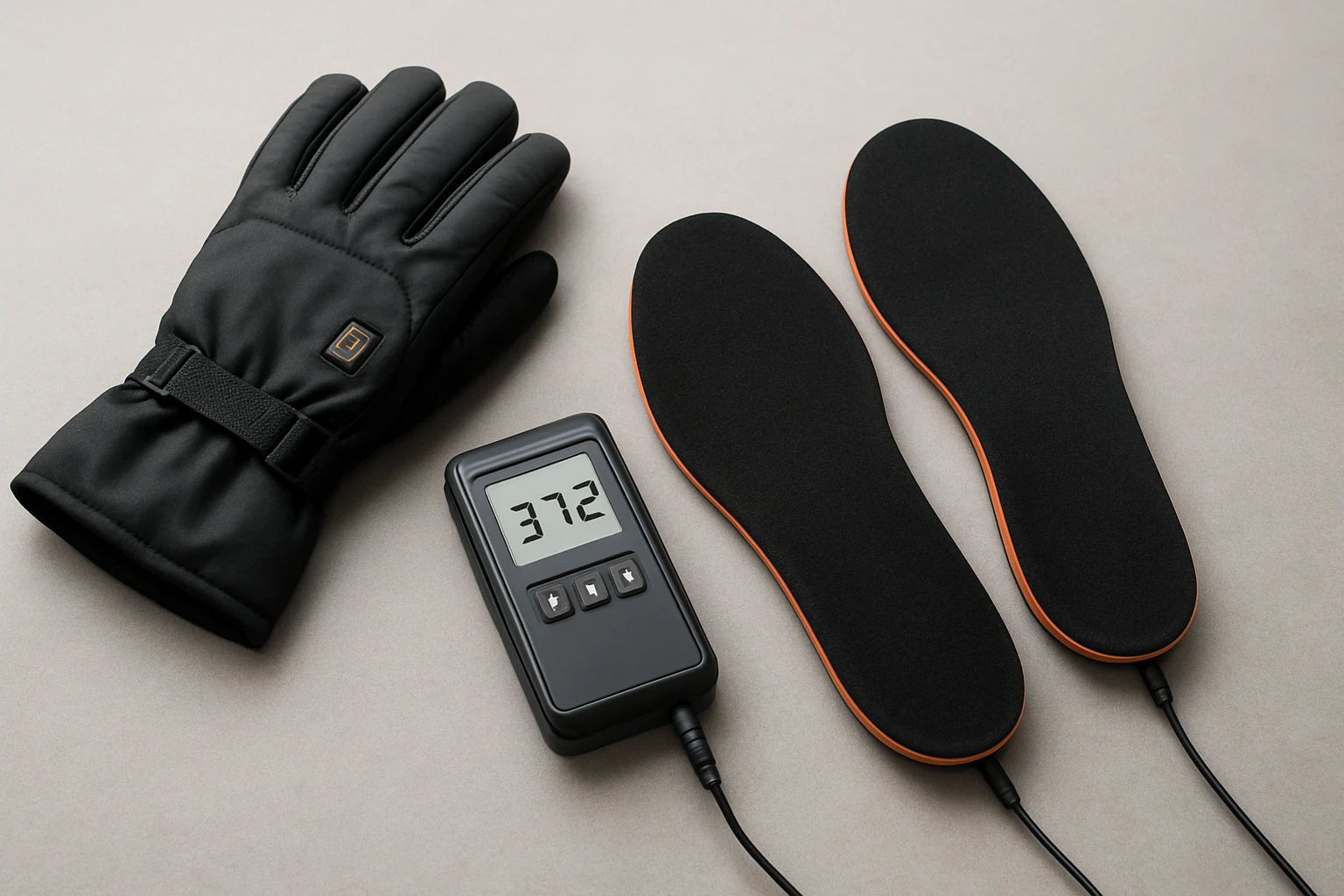
In this guide the reader will learn how to evaluate the real‑world battery runtime of heated gloves and heated insoles. Understanding actual runtime helps one select the most efficient equipment for winter sports, outdoor work, or daily commuting. The process described below is practical, repeatable, and based on measurable data rather than marketing claims. By following each step the reader can compare products such as LOTTBUTY Heated Gloves and Kamlif Heated Insoles with confidence.
What You’ll Need
- Two pairs of heated gloves (e.g., LOTTBUTY Heated Gloves, uncn Fingerless Heated Gloves, or SAVIOR HEAT Heated Gloves).
- One set of heated insoles (e.g., Kamlif Heated Insoles) or disposable warmers such as HotHands Insole Warmers.
- Digital thermometer or infrared gun for surface temperature measurement.
- Stopwatch or smartphone timer.
- Notebook or spreadsheet for data logging.
- Cold environment (outside temperature below 32°F / 0°C) or a climate‑controlled chamber.
Step 1: Prepare the Test Area and Equipment
First, select a location where ambient temperature remains stable for at least one hour. An outdoor setting on a calm day or a refrigerated room works well. Place the thermometer in a shaded spot to record ambient temperature every five minutes. Ensure that the gloves and insoles are fully charged according to the manufacturers’ instructions. For example, LOTTBUTY Heated Gloves use two 7.4 V 5000 mAh batteries that reach full charge after approximately 2‑3 hours, providing 4‑7 hours of heat on a single charge. Kamlif Heated Insoles contain a 7.4 V 23.1 Wh battery that can be charged with a standard USB charger, delivering up to 12 hours of warmth.
Step 2: Establish Baseline Measurements
Before activating any heating element, record the baseline temperature of each glove surface and each insole. Use the infrared gun to measure the palm, back of the hand, and fingertip for gloves, and the arch and toe area for insoles. Write these values in the log along with the ambient temperature. Baseline data provide a reference point for calculating temperature increase and heat retention.
Step 3: Test Battery Life on Low Heat Setting
Set each glove to its lowest heat mode. LOTTBUTY Heated Gloves offer an "Low" setting that maintains approximately 104 °F (40 °C). The uncn Fingerless Heated Gloves provide a low setting of 113 °F (45 °C). Activate the heating element and start the timer. Record the temperature every ten minutes until the device automatically shuts off or the temperature falls below 90 °F (32 °C). Note the total runtime in minutes. This low‑setting test simulates extended activities such as a full day of snowmobiling where moderate warmth is sufficient.
Step 4: Test Battery Life on High Heat Setting
Repeat the procedure using the highest heat mode for each product. LOTTBUTY Heated Gloves reach 131 °F (55 °C) on the "High" setting, while SAVIOR HEAT Heated Gloves provide a maximum of 149 °F (65 °C). For insoles, Kamlif Heated Insoles have three temperature levels; select the highest. Start the timer and record temperature at five‑minute intervals. High‑heat testing reflects short, intense outings such as a mountain ascent where rapid warmth is essential.
Step 5: Capture Temperature Decay After Power‑Off
When the device powers down, continue recording the surface temperature every five minutes for at least thirty minutes. This decay curve indicates how well the material retains heat. Gloves with waterproof, windproof membranes—such as the 7‑layer construction of SAVIOR HEAT Heated Gloves—typically exhibit slower temperature loss compared with thinner designs like the uncn Fingerless Heated Gloves.
Step 6: Analyze the Collected Data
Transfer the logged values to a spreadsheet. Calculate average runtime for low and high settings, temperature rise above ambient, and the rate of cooling after shutdown. Create a simple chart to visualize performance differences. Products that deliver longer runtime with comparable temperature increase are more energy‑efficient. For instance, Kamlif Heated Insoles often exceed ten hours on a single charge, while disposable HotHands Insole Warmers provide up to nine hours of passive heat without any battery management.
Step 7: Compare Results Across Products
Summarize findings in a table that includes runtime, temperature range, weight, and price. Highlight key trade‑offs: LOTTBUTY Heated Gloves cost $39.99, have a 4‑star rating from 124 reviews, and offer four temperature modes with a battery life of up to seven hours. SAVIOR HEAT Heated Gloves are priced at $149.99, carry a 4.3‑star rating from 3,243 reviews, and provide up to twelve hours of heat due to dual 7.4 V 3000 mAh batteries. The uncn Fingerless Heated Gloves are the most lightweight option at 180 g, priced at $34.99, and receive a 4.1‑star rating from 836 reviews, but their runtime is limited to three hours on high heat. Use these comparisons to decide which tool best matches the intended activity and budget.
Tips & Pro Tips
- Charge batteries to 100 % before each test to eliminate variability caused by partial charges.
- Perform tests on a dry day; moisture can affect the waterproof rating of gloves and alter heat retention.
- When testing insoles, wear the same type of boot for each trial to control for insulation differences.
- Use a consistent hand posture (fingers slightly curled) to ensure the thermometer measures the same area each time.
- For rapid charging, connect the USB charger to a high‑amperage wall outlet; Kamlif Heated Insoles recharge fully in about two hours.
Troubleshooting
Battery drains faster than expected: Verify that the device is not set to "Auto" mode, which may increase power consumption based on ambient temperature. Reset the device by turning it off for one minute before restarting.
Temperature does not rise: Ensure the battery pack is securely seated. Some models, such as the uncn Fingerless Heated Gloves, have a magnetic connector that can become loose after repeated use.
Excessive heat on fingertips: Adjust the wrist loops or elastic straps to improve fit. Tightening the straps reduces heat loss through gaps, a design feature highlighted in LOTTBUTY Heated Gloves.
Conclusion
By following this systematic approach one can obtain reliable, real‑world runtime data for heated gloves and insoles. The guide demonstrates how to measure low and high heat performance, capture temperature decay, and compare products based on objective metrics. Armed with this information the reader can select the most suitable heated apparel for winter sports, construction work, or everyday cold‑weather commuting, while also understanding the cost‑benefit relationship of each option.
Products Mentioned in This Guide
Frequently Asked Questions
How can I accurately measure the real‑world runtime of heated gloves?
Use a fully charged battery, set the gloves to your typical heat setting, and time how long they stay above your comfort temperature with a stopwatch.
What tools are needed to test heated insoles’ battery life?
A digital thermometer or infrared gun to monitor surface temperature and a stopwatch to record the duration until the temperature drops below the desired level.
Why should I test battery runtime instead of relying on manufacturer claims?
Manufacturer specs often reflect ideal conditions; real‑world testing shows performance under your actual usage, temperature, and activity levels.
Can I compare different heated glove brands using the same test method?
Yes—run each pair under identical settings, ambient temperature, and activity, then record the time each maintains the target warmth.
How do disposable warmers like HotHands compare to rechargeable heated insoles in runtime tests?
Disposable warmers typically provide a shorter, fixed heat period, while rechargeable insoles can be measured for multiple cycles to assess total usable runtime.