Introduction
This guide explains how field crews can safely ship and store spare batteries while meeting regulatory requirements. It covers assessment, organization, testing, packaging, labeling, and documentation. Readers will learn practical steps that reduce fire risk, prevent battery drain, and ensure compliance with transportation standards. The information is valuable for technicians, emergency responders, and anyone responsible for mobile power assets.
What You'll Need
- Organized storage container for AA, AAA, C, D, 9‑Volt and coin cells – Battery Daddy Case
- Fire‑resistant bag for lithium‑polymer (LiPo) batteries – FLASLD Fireproof Lipo Bag
- Alternative fire‑resistant pouch for larger LiPo packs – Zeee Fireproof Lipo Bag
- Battery tester (included with the Battery Daddy Case)
- Labeling materials, insulated shipping boxes, and compliance paperwork
Step 1: Assess Battery Types and Quantities
The first task is to identify each battery's chemistry, voltage, and capacity. Separate alkaline or NiMH cells from lithium‑ion and LiPo packs because they have different fire‑hazard profiles. Record the total number of units, their dimensions, and intended deployment dates. This inventory forms the basis for selecting the appropriate storage solution and for completing hazardous‑material declarations required by carriers such as UPS or FedEx.
Step 2: Choose Appropriate Storage Containers
For common household and tool batteries (AA, AAA, C, D, 9‑Volt, coin cells), the Battery Daddy Case provides a compact double‑sided layout that holds up to 180 units. Its clear "Easy View" lid lets crews quickly locate the correct cell without removing the lid, reducing exposure to moisture and accidental shorting. The secure latches and built‑in handle make the case portable for field operations.
For LiPo batteries, which can ignite if shorted, a fire‑resistant enclosure is mandatory. The FLASLD Fireproof Lipo Bag offers temperature resistance up to 1000℉, three‑layer explosion‑proof construction, and a waterproof silicone coating. Its reflective strip aids visibility in low‑light environments, and the sturdy straps simplify transport.
When the FLASLD bag is unavailable or a larger pouch is needed, the Zeee Fireproof Lipo Bag provides comparable flame‑retardant protection with a zip closure and a side charging port. Both bags are designed to contain a fire long enough for the crew to react safely.
Step 3: Prepare Batteries for Shipping
Before packing, test each battery with the built‑in tester in the Battery Daddy Case. Align the positive and negative terminals on the tester; the indicator will display charge status. Discard cells that read below 20% capacity, as low charge can increase internal resistance and heat generation.
For LiPo packs, ensure the voltage is within the manufacturer's safe range and that the protective circuit is engaged. If the bag includes a charging port, verify that the charger is disconnected and that the terminals are insulated with non‑conductive tape.
Place all tested alkaline cells in the Battery Daddy Case, securing the lid. Insert LiPo batteries into the fire‑proof bag, positioning them away from seams to avoid direct contact with the bag's interior layers. Seal the bag tightly using the Velcro or zip closure.
Step 4: Package for Transport
Choose a corrugated shipping box that exceeds the combined dimensions of the storage containers by at least two inches on each side. Line the interior with anti‑static bubble wrap to cushion the cases and to prevent static discharge on lithium cells. Place the Battery Daddy Case in one compartment and the fire‑proof LiPo bag in another, ensuring they do not touch each other directly.
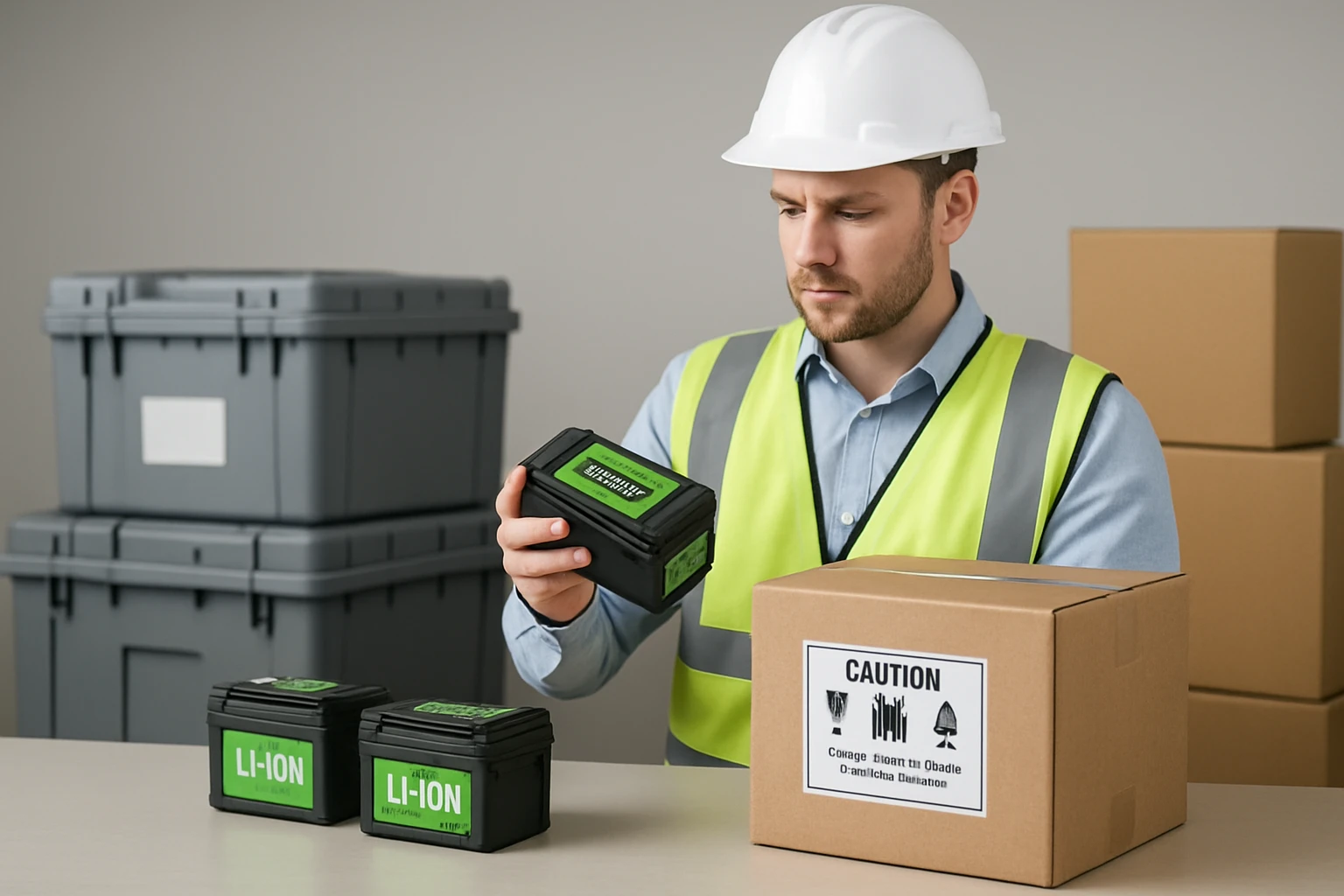
Seal the outer box with reinforced packing tape. Affix a warning label that reads "Lithium Battery – Handle with Care" in accordance with IATA and DOT regulations. Include a copy of the battery inventory list inside the package for quick reference by the carrier.
Step 5: Label and Document Compliance
Accurate labeling is essential for regulatory compliance. Use the UN 3480 and UN 3481 codes for lithium‑ion batteries, and UN 2794 for LiPo packs. Attach the appropriate hazard class stickers and ensure the shipping manifest reflects the total net weight and number of batteries.
Maintain a digital record of each shipment, including the product serial numbers, test results, and packaging photographs. This documentation supports audits and demonstrates that the crew followed best‑practice safety protocols.
Tips & Pro Tips
- Store the Battery Daddy Case in a climate‑controlled vehicle to avoid extreme temperatures that can accelerate self‑discharge.
- Never mix alkaline cells with lithium cells in the same container; cross‑contamination can cause accidental short circuits.
- When charging LiPo batteries, always keep the fire‑proof bag open enough for ventilation, but never remove the battery from the bag during the charging cycle.
- Consider adding a small fire‑extinguishing blanket inside the outer shipping box for an extra layer of protection.
- Regularly inspect the fire‑proof bags for tears or wear; replace them at the first sign of damage.
Troubleshooting
Problem: Battery tester shows a dead cell, but the battery appears new.
Solution: Verify that the terminals are clean and free of corrosion. Use a cotton swab dipped in isopropyl alcohol to clean contacts, then retest.
Problem: Fire‑proof bag fails to close securely.
Solution: Ensure that the battery is positioned away from the bag's sealing edge. If the zipper or Velcro is damaged, replace the bag to maintain safety compliance.
Conclusion
By following the steps outlined above, field crews can ship and store spare batteries with confidence, minimizing fire risk and meeting regulatory standards. Proper assessment, organized storage, thorough testing, fire‑resistant packaging, and accurate documentation form a comprehensive safety system. Implement these practices to protect personnel, equipment, and the environment while maintaining operational readiness.
Products Mentioned in This Guide
Frequently Asked Questions
What type of container should I use to store assorted AA, AAA, C, D, 9‑Volt, and coin cell batteries?
Use an organized storage case such as the Battery Daddy Case, which also includes a built‑in battery tester.
How can I safely transport lithium‑polymer (LiPo) batteries to prevent fire hazards?
Place LiPo batteries in a fire‑resistant bag like the FLASLD or Zeee fireproof Lipo bags before shipping.
What labeling is required for shipping spare batteries?
Label each package with the battery type, capacity, and hazard symbols per DOT/IMDG regulations.
Do I need to test spare batteries before shipping them?
Yes, test voltage and capacity with a battery tester to ensure they are not over‑discharged or damaged.
Which regulations govern the shipment of spare batteries for field crews?
Follow DOT (U.S.) and IATA/IMDG standards for hazardous materials, including packaging, labeling, and documentation requirements.