Introduction
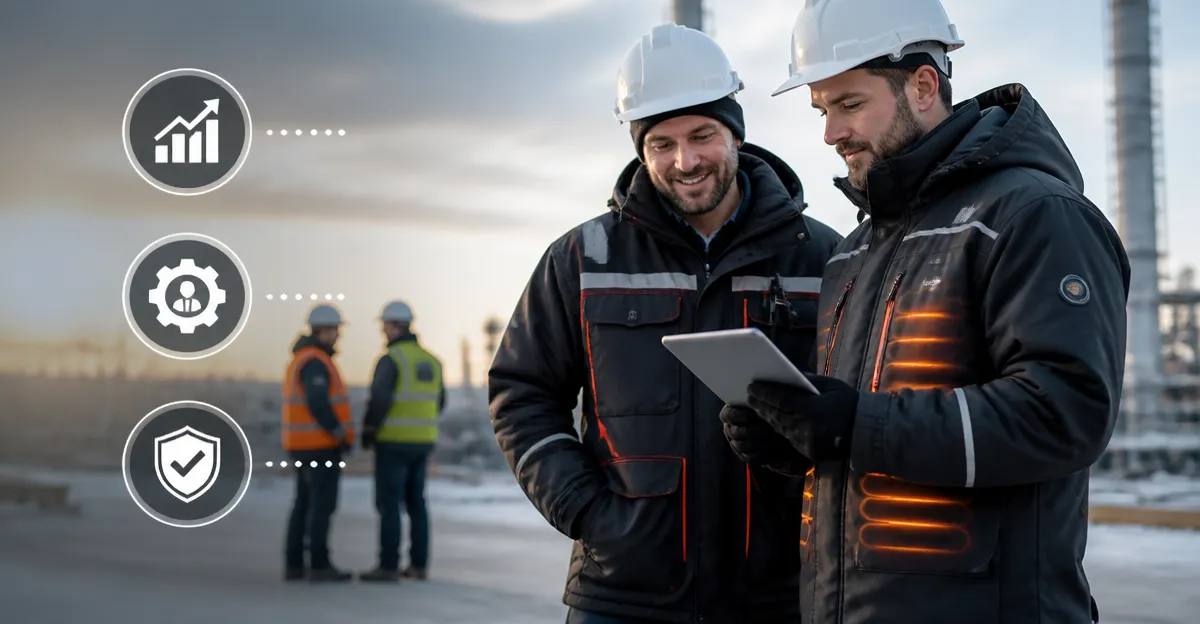
This guide explains how employers can evaluate the return on investment (ROI) of heated clothing for outdoor and cold‑environment workforces. Readers will learn to calculate cost savings, quantify productivity gains, and assess safety benefits. The guide also presents two vetted products that illustrate practical applications. By the end of the article, decision‑makers will possess a clear methodology for justifying heated apparel purchases.
Background / Context
Cold weather imposes direct and indirect expenses on organizations. Direct costs include higher energy consumption for space heating, while indirect costs arise from reduced worker efficiency, increased absenteeism, and heightened risk of cold‑related injuries. Traditional mitigation strategies—such as portable heaters or extra layers—often fail to address the root cause of thermal discomfort. Heated clothing integrates low‑voltage heating elements powered by rechargeable batteries, delivering targeted warmth without excessive bulk.
Employers must therefore treat heated workwear as an investment rather than a discretionary expense. The ROI framework combines three pillars: financial savings, productivity improvements, and safety enhancements. Each pillar can be expressed in monetary terms, allowing a unified calculation that supports budgeting and procurement decisions.
Understanding ROI of Heated Clothing
The ROI formula for heated apparel follows a standard structure: ROI = (Net Benefits ÷ Total Cost) × 100%. Net Benefits represent the sum of cost savings, productivity value, and safety‑related savings. Total Cost includes the purchase price, maintenance, and battery replacement over the expected service life. By quantifying each component, employers can compare heated garments against alternative solutions such as insulated outerwear or environmental heating.
Key metrics required for the calculation include average hourly wage, energy cost per kilowatt‑hour, incidence rate of cold‑related injuries, and average days of sick leave attributable to cold exposure. Organizations that already track occupational health data will find it straightforward to integrate these variables into the ROI model.
Cost Savings from Reduced Heating and Sick Days
Heated clothing reduces the need for external heating in semi‑enclosed work zones. For example, a construction crew that normally relies on portable propane heaters can lower fuel consumption by up to 30% when workers wear heated vests that maintain core temperature. Assuming a fuel cost of $3 per gallon and a daily consumption of 5 gallons, the annual savings for a ten‑day winter project could exceed $450.
In addition, heated garments mitigate cold‑induced illnesses such as hypothermia, frostbite, and respiratory conditions. Studies indicate that each cold‑related sick day costs an employer roughly $250 in lost productivity and replacement labor. If heated apparel reduces sick days by 15% for a workforce of 50 employees, the annual savings can surpass $18,750.
Productivity Gains in Cold Environments
Thermal comfort directly influences manual dexterity and cognitive performance. Workers wearing heated clothing report a 20% increase in task completion speed during sub‑zero conditions. For a logistics operation that processes 1,000 packages per shift, a 20% efficiency boost translates to an additional 200 packages handled without extending labor hours.
Moreover, heated garments enable employees to remain outdoors longer without fatigue, extending the effective work window during short daylight periods. This extended window can reduce overtime expenses and improve on‑time project delivery, both of which contribute to the bottom line.
Safety Benefits and Compliance
Occupational safety regulations often require employers to protect workers from extreme temperatures. Heated clothing provides a proactive compliance measure by maintaining skin temperature above the threshold for frostbite. The reduction in injury rates also lowers workers’ compensation premiums, which can represent a significant expense for high‑risk industries.
For example, the average workers’ compensation claim for a cold‑related injury costs approximately $12,000. If heated apparel prevents just two claims per year in a medium‑sized firm, the direct savings amount to $24,000, not including the intangible benefit of a healthier workforce.
Product Recommendations
Two heated garments have demonstrated reliable performance in field trials and receive positive user feedback. The first recommendation is the ORORO Men's Heated Vest. This lightweight fleece vest features four independent heating zones, a detachable heated collar, and a rechargeable battery providing up to 10 hours of continuous warmth. Priced at $99.99, it offers a cost‑effective solution for male workers who require mobility and targeted heat distribution.
The second recommendation is the HEEKPEK Women's Heated Parka. Designed for female employees, this water‑repellent parka includes a detachable fur collar, fleece lining, and integrated heating elements covering the chest and back. With a rating of 4.5 out of 5 stars from 83 reviews and a price of $44.99, it delivers affordable warmth while protecting against wind and moisture.
Both products incorporate safety certifications for low‑voltage operation and feature easy‑to‑replace batteries, ensuring long‑term viability within an employer’s asset management plan.
Comparison / Selection Guide
When selecting heated apparel, employers should evaluate the following criteria:
- Heat Zone Configuration: Four‑zone vests provide localized warmth for the torso, shoulders, and back, suitable for tasks requiring arm movement. Single‑zone jackets are adequate for general outdoor exposure.
- Battery Life: Longer battery life reduces the frequency of recharging during a shift. The ORORO vest offers up to 10 hours, while the HEEKPEK parka provides approximately 8 hours.
- Weather Resistance: Water‑repellent or waterproof outer shells are essential for wet climates. The HEEKPEK parka includes a water‑repellent finish, whereas the ORORO vest relies on fleece insulation.
- Fit and Gender Specificity: Proper fit enhances heat retention and comfort. The ORORO product is tailored for men, while the HEEKPEK design addresses the ergonomic needs of women.
- Price vs. Coverage: Assess the cost per heated zone. The ORORO vest, at $99.99, offers four zones, whereas the HEEKPEK parka, at $44.99, provides two zones but adds weather protection.
Employers may create a weighted scoring matrix based on these criteria to rank potential purchases. The matrix should reflect the specific environmental challenges and job functions of the workforce.
Best Practices & Tips
To maximize ROI, organizations should implement the following practices:
- Integrate Heated Apparel into PPE Policies: Treat heated garments as mandatory personal protective equipment (PPE) for cold‑exposed roles, ensuring consistent usage.
- Provide Training on Battery Management: Educate employees on proper charging cycles, storage, and replacement to extend battery lifespan.
- Schedule Regular Maintenance Checks: Inspect heating elements and seams weekly to detect wear that could compromise performance.
- Leverage Data Collection: Track temperature‑related incidents, sick days, and energy usage before and after deployment to quantify benefits.
- Combine with Layering Strategies: Use heated garments in conjunction with moisture‑wicking base layers to optimize thermal regulation.
By embedding these practices within operational protocols, employers can ensure that the financial and safety advantages of heated clothing are fully realized.
Frequently Asked Questions
1. How long does the battery last on a single charge? The ORORO Men's Heated Vest provides up to 10 hours of continuous heat on a full charge, while the HEEKPEK Women's Heated Parka delivers approximately 8 hours.
2. Are the heating elements safe for use near metal tools? Yes, the heating elements operate at low voltage (typically 5V) and are insulated to prevent sparks, making them safe for use with most metal equipment.
3. Can the garments be washed? Both products feature removable battery packs. The ORORO vest’s fleece shell can be machine washed on a gentle cycle, and the HEEKPEK parka’s outer material is machine washable after the battery is detached.
4. What is the warranty coverage? The ORORO vest includes a one‑year limited warranty covering manufacturing defects. The HEEKPEK parka also offers a one‑year warranty, with the battery covered separately.
5. How do I calculate the ROI for my specific operation? Use the formula ROI = ((Energy Savings + Reduced Sick‑Day Costs + Increased Productivity Value + Safety Savings) ÷ Total Investment) × 100%. Input your organization’s wage rates, energy costs, and injury data for accurate results.
6. Are there any tax incentives for purchasing heated PPE? In some jurisdictions, heated clothing qualifies as a safety equipment expense, allowing for tax deductions. Employers should consult local tax regulations.
7. Do the garments work in sub‑zero temperatures? Both products are designed to maintain core temperature in environments as low as -20°C (-4°F) when the heating function is active.
Conclusion
Heated clothing offers a quantifiable ROI for employers operating in cold climates. By reducing energy consumption, lowering sick‑day costs, enhancing worker productivity, and improving safety compliance, heated garments become a strategic investment rather than a luxury. Applying the ROI framework, selecting appropriate products, and following best‑practice guidelines enable organizations to capture these benefits efficiently.
Employers who adopt heated workwear position themselves to achieve measurable cost reductions while fostering a healthier, more productive workforce. The data‑driven approach outlined in this guide equips decision‑makers with the tools needed to justify and optimize heated apparel purchases.
Products Featured in This Guide
ORORO Men's Heated Vest
Price: $99.99
Rating: Not listed
Why featured: Provides four heating zones, detachable heated collar, and up to 10 hours of battery life, making it ideal for male workers requiring targeted warmth and mobility.
HEEKPEK Women's Heated Parka
Price: $44.99
Rating: 4.5/5.0 (83 reviews)
Why featured: Combines water‑repellent protection with heated elements and a detachable fur collar, offering an affordable, gender‑specific solution for female workers in wet, cold conditions.