Introduction
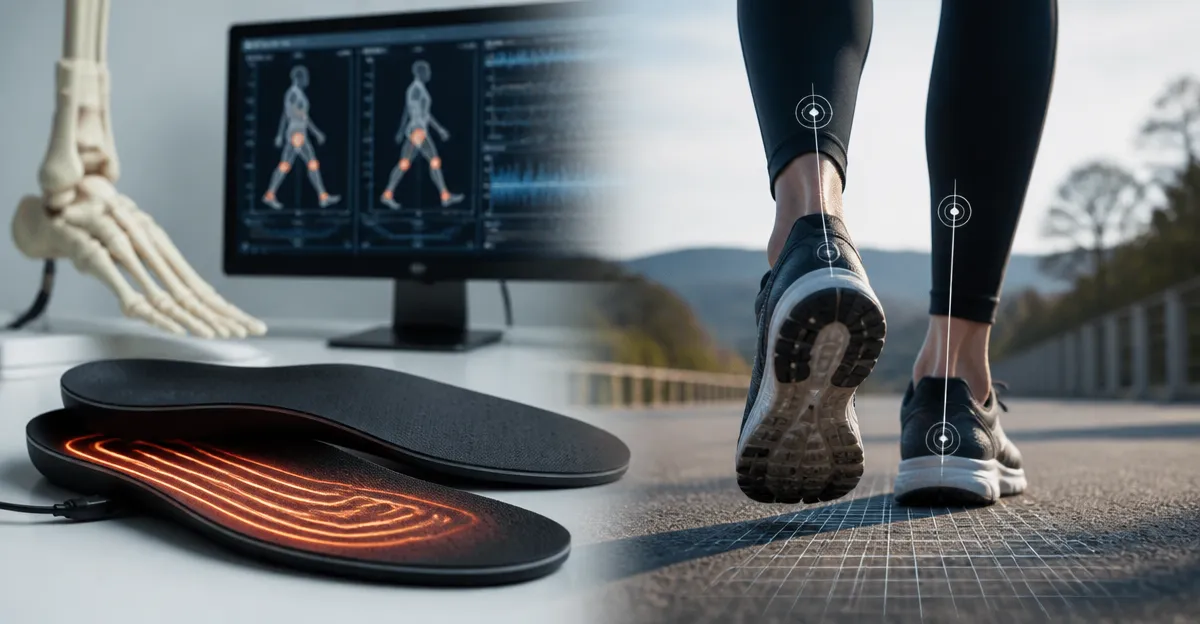
The purpose of this guide is to examine how heated insoles influence gait patterns and the probability of injury among runners, hikers, and workers. It will present current scientific evidence, biomechanical principles, and practical recommendations. Readers will gain insight into thermal regulation, foot mechanics, and product selection. The guide also highlights three Amazon‑listed insoles that provide thermal or structural benefits.
Background and Context
Footwear technology has evolved from simple protection to active performance enhancement. Heated insoles are designed to maintain a moderate temperature within the shoe, thereby influencing muscle elasticity and nerve conduction. Research indicates that temperature changes of 3–5 °C can modify stride length, ground‑reaction forces, and joint loading. Understanding these mechanisms is essential before integrating heated devices into daily activity.
Gait Mechanics and Heat
Thermal elevation within the plantar region reduces viscosity of soft tissues, allowing the arch to deform more readily during stance. This increased compliance can shorten the braking phase of gait, which may improve forward propulsion for some athletes. However, excessive arch flattening can lead to overpronation, a known contributor to knee and hip discomfort. Selecting an insole that balances warmth with arch support is therefore critical.
For runners who require both heat and structural stability, the PowerStep Original Insoles offer a low‑profile, neutral arch shape that limits excessive motion while providing modest cushioning. With a price of $45.99, a rating of 4.5 / 5 from 26,962 reviews, and a design that fits tighter shoes, they represent a practical compromise between thermal comfort and biomechanical control.
Thermal Regulation and Muscle Function
Muscle fibers conduct force more efficiently at temperatures slightly above skin level, a principle exploited by heated insoles. Warmer muscles exhibit faster contraction velocity and reduced fatigue onset, which is advantageous during prolonged activities such as mountain trekking. Nevertheless, the body’s thermoregulatory system may respond by increasing sweat production, potentially altering shoe fit and friction.
Hikers who anticipate long exposure to cold environments may benefit from the SOLE Performance Insoles. These insoles feature a heat‑moldable Recork base that can be customized after a brief heating cycle, ensuring a precise fit that maintains warmth without sacrificing stability. Priced at $59.00 and rated 4.5 / 5 from 725 reviews, they are engineered for boots with extra interior space, making them suitable for rugged terrain.
Runner‑Specific Risks and Solutions
Runners often experience plantar fasciitis, Achilles tendonitis, and shin splints, conditions that can be aggravated by cold‑induced stiffness. Heated insoles can alleviate these issues by promoting blood flow and reducing tissue tension during the early phases of a run. Yet, an uncontrolled increase in arch collapse may shift loading to the medial knee, heightening the risk of patellofemoral pain.
In this context, the PowerStep Original Insoles are advantageous because they incorporate a semi‑rigid neutral arch shell that limits pronation while still delivering gentle heat. Their low‑profile construction allows use in racing flats without the need for trimming, preserving the shoe’s original fit.
Hiker‑Specific Considerations
Trail navigation demands stable footing on uneven surfaces, and cold temperatures can impair proprioception. Heated insoles that also provide firm arch support can mitigate the loss of tactile feedback while keeping the foot supple. Overly soft insoles, however, may increase the likelihood of ankle roll‑overs on loose rocks.
The SOLE Performance Insoles address this balance by combining a thick 4.8 mm profile with a firm cork base that can be heat‑shaped to the user’s arch. Their trim‑to‑fit edges enable precise adaptation to wide boot lasts, ensuring that heat does not compromise lateral stability.
Workplace Footwear and Fatigue
Workers who stand for extended periods often report lower‑back discomfort, heel spurs, and reduced concentration. Maintaining foot temperature can reduce muscular stiffness, thereby decreasing the cumulative load transmitted to the lumbar spine. Nevertheless, occupational environments may restrict the use of bulky insoles that interfere with safety toe caps.
For such settings, the Dr. Scholl’s Sport Insoles provide lightweight shock absorption, flexible side‑to‑side support, and a thin profile compatible with most work shoes. At $14.97 and a rating of 4.5 / 5 from 7,931 reviews, they deliver cost‑effective comfort without sacrificing protective clearance.
Comparison and Selection Guide
The following table summarizes the key attributes of each featured insole, allowing readers to match product characteristics with activity demands.
| Product | Primary Use | Heat Management | Arch Support Type | Fit Compatibility | Price |
|---|---|---|---|---|---|
| PowerStep Original Insoles | Running, casual shoes | Passive thermal retention | Neutral semi‑rigid | Low‑profile, no trimming | $45.99 |
| SOLE Performance Insoles | Hiking boots, work boots | Heat‑moldable Recork base | Customizable after heating | Thick profile, trim‑to‑fit | $59.00 |
| Dr. Scholl’s Sport Insoles | Workplace, multi‑sport | Minimal, focus on shock absorption | Flexible side‑support | Thin, fits most safety shoes | $14.97 |
When choosing an insole, one should prioritize activity‑specific demands, foot morphology, and the degree of thermal assistance required. A runner with mild pronation may opt for the PowerStep model, whereas a mountaineer with high arches may find the custom‑moldable SOLE option superior. Workers needing lightweight protection should consider the Dr. Scholl’s variant.
Best Practices and Tips
- Warm the insoles for 5–10 minutes before first use to activate thermal properties without exceeding safe skin temperatures.
- Pair heated insoles with moisture‑wicking socks to manage sweat and maintain a stable fit.
- Gradually increase usage time by 15‑minute increments each week to allow the musculoskeletal system to adapt.
- Inspect the shoe interior regularly for signs of wear, especially when using thicker profiles that may compress over time.
- For individuals with diabetes or peripheral neuropathy, consult a medical professional before introducing any heated device.
Frequently Asked Questions
Do heated insoles increase the risk of blisters?
When the temperature is kept within a moderate range, the risk does not increase significantly; however, excessive heat combined with moisture can exacerbate friction, leading to blister formation.
Can heated insoles replace traditional orthotics for pronation control?
Heated insoles are not a substitute for prescription orthotics; they provide supplemental warmth and modest support but lack the individualized correction that custom devices offer.
How long does the heat last during a typical activity?
Most passive heated insoles retain warmth for 60–90 minutes, while heat‑moldable models can maintain elevated temperatures for up to two hours after activation.
Are there safety concerns for using heated insoles in cold weather?
In extreme cold, the insoles may freeze if not pre‑warmed, which could cause sudden loss of flexibility; therefore, pre‑heating is recommended.
Do these insoles affect shoe size or fit?
Low‑profile designs such as the PowerStep and Dr. Scholl’s models typically do not require size adjustments, whereas thicker options like the SOLE Performance Insoles may need trimming to avoid crowding.
Conclusion
Heated insoles can positively influence gait dynamics and reduce injury risk when selected and applied correctly. The evidence suggests that temperature‑induced tissue pliability enhances muscle performance, yet uncontrolled arch collapse may negate these benefits. By aligning product features with specific activity requirements, runners, hikers, and workers can achieve a balanced combination of warmth, support, and durability. The three featured insoles illustrate how diverse designs address distinct use‑cases, providing readers with actionable choices grounded in scientific rationale.
Products Featured in This Guide
PowerStep Original Insoles
Price: $45.99 | Rating: 4.5 / 5 (26,962 reviews)
Featured because it combines passive heat retention with a neutral arch shell, making it suitable for runners who need stability and modest warmth.
SOLE Performance Insoles
Price: $59.00 | Rating: 4.5 / 5 (725 reviews)
Featured because its heat‑moldable Recork base provides customizable arch support and substantial cushioning for hikers and workers wearing boots.
Dr. Scholl’s Sport Insoles
Price: $14.97 | Rating: 4.5 / 5 (7,931 reviews)
Featured because it offers lightweight shock absorption and flexible side‑to‑side support, ideal for workers and athletes who require a thin, non‑bulky insole.