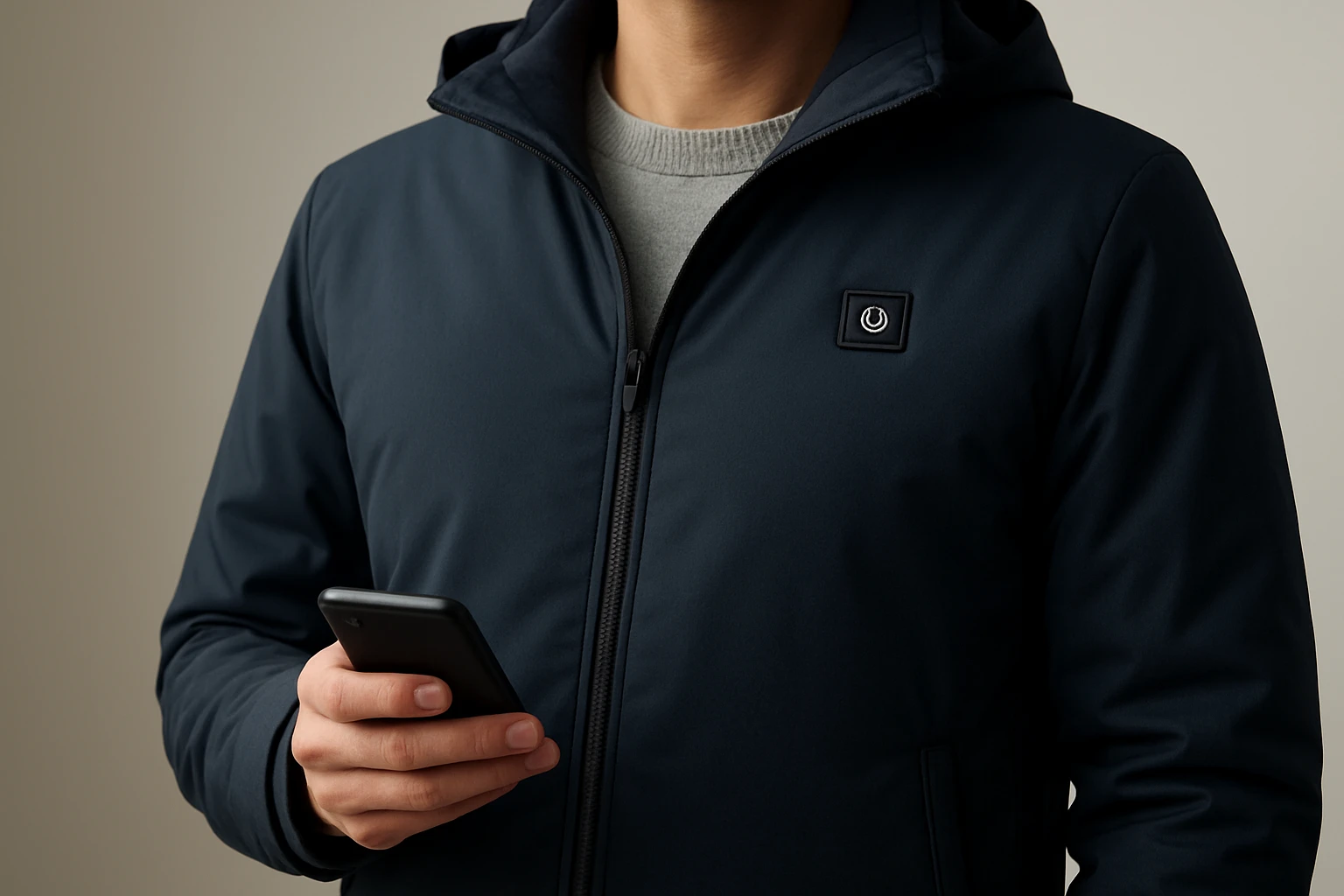
Ultimate Guide to Smart Heated Clothing: App Privacy, Firmware Updates & Security Best Practices
Introduction
Smart heated clothing combines textile comfort with electronic heating elements, creating a wearable that can be controlled via a mobile app or built‑in controller. This guide explains the privacy implications of connected apparel, how firmware updates keep devices safe, and the security practices that protect users from data leaks or malicious tampering. Readers will learn foundational concepts, see real‑world product examples, and receive actionable steps for maintaining a secure heating experience.
Throughout the article, the author references four top‑rated products that illustrate best‑in‑class design and security features. Each product is linked to its Amazon page so readers can explore specifications such as battery capacity, temperature zones, and user ratings. By the end of the guide, readers will be equipped to evaluate any smart heated garment for privacy, reliability, and overall value.
Background & Context
Smart heated garments rely on low‑voltage heating elements powered by rechargeable battery packs. The heating system is typically managed by a microcontroller that communicates with a companion app via Bluetooth Low Energy (BLE). This communication enables users to select temperature levels, set timers, and monitor battery status from a smartphone.
Because these devices exchange data wirelessly, they inherit the same privacy and security concerns found in other IoT products. Data such as location, usage patterns, and device identifiers may be transmitted to cloud services for analytics or firmware distribution. If not properly encrypted, this data can be intercepted or misused.
Firmware updates are essential for correcting bugs, improving heating efficiency, and patching security vulnerabilities. However, the update process itself must be authenticated to prevent malicious code injection. Understanding the update mechanism—whether over‑the‑air (OTA) or via a USB connection—helps users verify the integrity of their garments.
Finally, the physical design of the garment influences security. Battery placement, connector type, and waterproofing affect both user safety and the likelihood of accidental disconnection, which can lead to overheating or data loss.
Privacy Considerations for Connected Apparel
When a heated jacket or vest connects to a smartphone, it typically requests permission to access Bluetooth, location services, and sometimes storage. Users should scrutinize the app’s privacy policy to understand what information is collected and how it is stored. Opt‑in features, such as usage analytics, should be disabled unless the user explicitly wants to share data for product improvement.
Data transmitted during normal operation generally includes temperature setting, battery level, and device ID. This information is low‑risk, but if combined with location data, it could reveal a user’s movement patterns. Manufacturers that employ end‑to‑end encryption mitigate this risk, ensuring that only authorized servers can decode the payload.
For example, the KOVNLO Heated Vest uses a proprietary BLE protocol with AES‑128 encryption. The vest’s app allows users to toggle three temperature zones while displaying battery status, but it does not request location permissions, reducing exposure of personal data.
When evaluating any product, verify that the manufacturer provides a clear privacy statement and that the app does not request unnecessary permissions. Users can also limit data sharing by adjusting smartphone settings, such as revoking background Bluetooth access for the app.
Firmware Updates: Why They Matter and How to Manage Them
Firmware is the software that runs on the garment’s microcontroller, controlling heating elements, safety cut‑offs, and communication protocols. Manufacturers release updates to improve heat distribution, extend battery life, and fix security flaws that could allow unauthorized control.
Secure update mechanisms use digital signatures to verify that the firmware originates from the legitimate vendor. An OTA update that lacks signature verification could be hijacked, potentially turning the heating element on continuously and causing burns.
The DEWBU Heated Jacket (Women) includes a built‑in controller that checks for signed firmware before applying any changes. Users receive a notification in the companion app when a new version is available, and the update process takes less than two minutes.
Best practice: keep the garment’s firmware current, but only install updates from the official app or vendor website. Avoid sideloading firmware from third‑party sources, as these may contain malicious code.
Security Best Practices for Smart Heated Clothing
Physical security begins with proper battery handling. Batteries should be stored in a fire‑resistant container when not in use, and connectors must be inspected regularly for wear. A loose connection can cause intermittent heating, which may trigger safety shut‑offs or expose the device to short‑circuit risks.
Network security involves using a strong, unique password for the app’s account and enabling two‑factor authentication (2FA) if available. Because BLE connections are short‑range, users should only pair devices in a trusted environment and delete old pairings after a garment is sold or donated.
The Foern Heated Thermals feature a USB‑C charging port that supports both power delivery and data communication. The manufacturer recommends using only the supplied cables to prevent rogue devices from injecting malicious firmware during charging.
Finally, consider the garment’s water resistance. Moisture can degrade electronic components, leading to unexpected shutdowns or corrosion that compromises safety circuits. Products rated with an IPX4 or higher rating, such as the DEWBU Heated Jacket (Men), provide an additional layer of protection against rain and sweat.
Comparison & Selection Guide
| Feature | KOVNLO Heated Vest | DEWBU Heated Jacket (Women) | Foern Heated Thermals | DEWBU Heated Jacket (Men) |
|---|---|---|---|---|
| Price | $49.98 | $149.99 | $109.99 | $147.23 |
| Rating | 4.4/5 (2,456 reviews) | 4.3/5 (3,983 reviews) | 3.8/5 (37 reviews) | 4.4/5 (7,927 reviews) |
| Battery Pack | Not included (user‑supplied) | 12V battery pack included | 2× 16000 mAh rechargeable batteries | 12V battery pack included |
| Heating Zones | Multiple zones with smart controller | Uniform heating across shell | 42 zones (shoulders, back, knees, waist) | Uniform heating across shell |
| Water Resistance | Lightweight, water‑repellent | Water‑resistant, wind‑breaker | Fleece‑lined, water‑resistant | IPX4 rating, water‑resistant |
| App Support | Smart controller with LED indicators | Companion app for temperature control | App‑free, USB‑C power management | Companion app with battery monitoring |
When choosing a garment, prioritize the factors that align with your activity. For casual daily wear in mild cold, the KOVNLO Heated Vest offers affordability and modular battery options. For high‑intensity outdoor pursuits, the Foern Heated Thermals provide extensive heating zones and robust battery life. Users seeking a full‑body jacket with proven app security may prefer the DEWBU Heated Jacket (Men) or (Women), both of which include signed OTA updates and water‑resistant shells.
Best Practices & Tips
- Regularly inspect battery connectors for corrosion; clean with isopropyl alcohol if needed.
- Store garments in a cool, dry place when not in use to prolong battery lifespan.
- Enable app notifications for firmware releases and install updates promptly.
- Use the manufacturer‑provided charging cable to avoid data‑exfiltration risks.
- When pairing via BLE, keep the smartphone’s operating system up to date to benefit from the latest security patches.
- Consider layering: a heated base layer such as the Foern Heated Thermals can reduce the need for high jacket settings, conserving battery.
- Test the heating function in a safe environment before heading into extreme conditions to ensure all zones operate correctly.
Frequently Asked Questions
- Do heated garments collect my location data? Most reputable brands only collect device ID, temperature setting, and battery status. Location data is rarely required unless the app offers geo‑fencing features, which should be optional.
- Can I use a third‑party power bank with my heated jacket? Some jackets, like the DEWBU models, use a proprietary barrel jack. Users can adapt a power bank with the correct voltage and connector, but doing so may void the warranty and affect safety certifications.
- How often should I update firmware? Check the companion app weekly. Manufacturers typically release updates quarterly or when a critical vulnerability is discovered.
- Is it safe to wear a heated garment while exercising? Yes, provided you select a lower temperature setting and monitor battery temperature. Overheating can occur if the garment is set to high while the user’s body temperature is already elevated.
- What should I do if the heating stops working? First, verify battery charge and connector integrity. If the issue persists, reinstall the latest firmware or contact the manufacturer’s support line.
- Are these garments fire‑safe? All listed products incorporate automatic shut‑off circuits that trigger if temperatures exceed safe thresholds, meeting industry safety standards.
- Can I wash these garments? Most heated clothing is machine‑washable on a gentle cycle after removing the battery pack. Always follow the care instructions provided by the manufacturer.
Conclusion
Smart heated clothing offers unparalleled comfort for cold‑weather activities, but it introduces privacy, firmware, and security considerations that cannot be ignored. By understanding BLE permissions, verifying encrypted communication, and maintaining up‑to‑date firmware, users can enjoy warmth without compromising personal data. Selecting a garment that aligns with one’s activity level, battery preferences, and security features ensures a safe and satisfying experience.
Whether you choose the budget‑friendly KOVNLO Heated Vest, the feature‑rich DEWBU Heated Jackets, or the versatile Foern Heated Thermals, applying the best‑practice checklist will protect both your body and your digital footprint.
Products Featured in This Guide
KOVNLO Heated Vest
Price: $49.98 | Rating: 4.4/5 (2,456 reviews)
Featured for its affordable price, modular battery option, and AES‑128 encrypted BLE communication.
DEWBU Heated Jacket (Women)
Price: $149.99 | Rating: 4.3/5 (3,983 reviews)
Highlighted for its integrated 12V battery pack, OTA firmware signing, and water‑resistant soft‑shell design.
Foern Heated Thermals
Price: $109.99 | Rating: 3.8/5 (37 reviews)
Chosen for its 42 heating zones, dual high‑capacity batteries, and USB‑C power management that supports secure charging.
DEWBU Heated Jacket (Men)
Price: $147.23 | Rating: 4.4/5 (7,927 reviews)
Included for its IPX4 water resistance, signed OTA updates, and strong user feedback regarding durability.