Heated Clothing and Lymphedema: Essential Safety Guide — Risks, Precautions, and Safe Use
Introduction
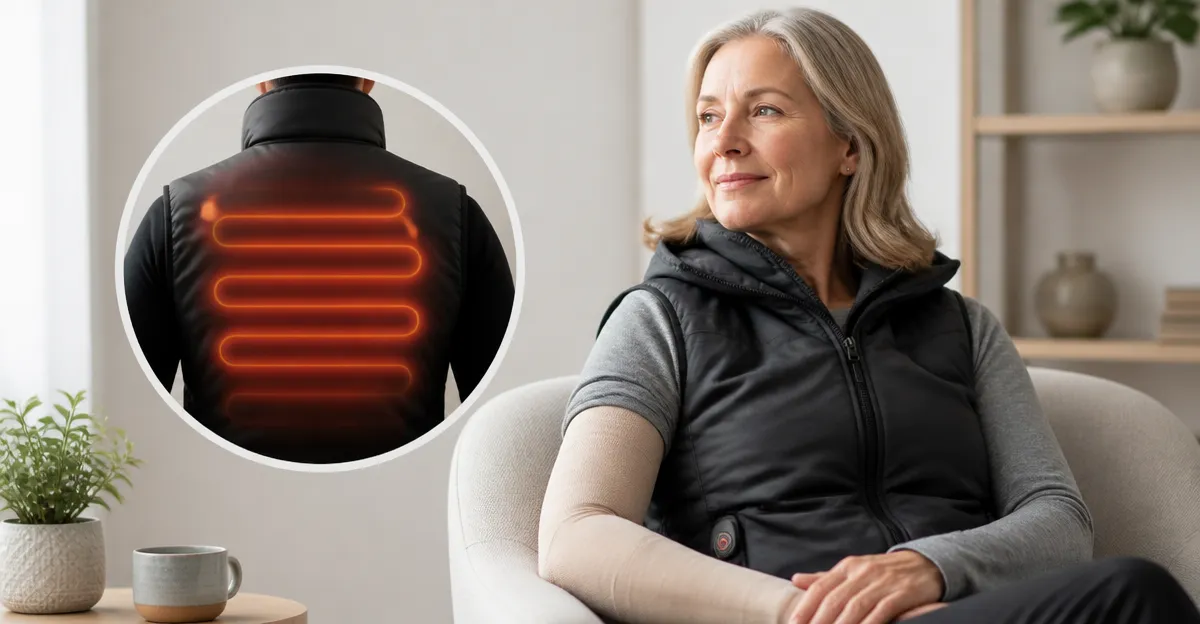
Heated apparel has become a valuable tool for individuals who experience chronic swelling and discomfort associated with lymphedema. This guide explains the physiological considerations, outlines potential hazards, and provides actionable recommendations for safe usage. Readers will learn how to evaluate heated garments, understand battery and heating zone specifications, and integrate warmth into a comprehensive lymphedema management plan.
The article is organized into background information, detailed safety strategies, product recommendations, a comparison chart, best‑practice tips, frequently asked questions, and a concise conclusion. By following the guidance herein, one can benefit from therapeutic warmth while minimizing the risk of tissue damage or infection.
Background and Context
Lymphedema is a condition in which lymphatic fluid accumulates in the interstitial spaces, leading to swelling, heaviness, and reduced mobility. Heat can improve lymphatic flow by promoting vasodilation, but excessive temperature or prolonged exposure may exacerbate inflammation or cause burns. Therefore, any heated garment must provide precise temperature control, rapid shut‑off, and uniform heat distribution.
Modern heated clothing utilizes carbon‑fiber or metal‑foil heating elements powered by rechargeable lithium‑ion batteries. These systems typically offer three to four temperature settings, ranging from low (approximately 115°F/46°C) to high (up to 149°F/65°C). Battery capacity is expressed in watt‑hours (Wh) or milliampere‑hours (mAh) and determines runtime on each setting. Understanding these technical specifications is essential for selecting a device that aligns with therapeutic goals.
Clinical guidelines recommend that surface temperature on affected limbs should not exceed 104°F (40°C) for extended periods. Short bursts of higher heat may be tolerated under professional supervision, but most patients benefit from consistent low to medium warmth for several hours per day.
Key Safety Concepts for Heated Apparel
Three core safety concepts govern the appropriate use of heated clothing for lymphedema: temperature regulation, battery management, and garment fit. Temperature regulation involves selecting a setting that maintains skin temperature within safe limits, while battery management ensures that the power source does not overheat or leak. Proper garment fit prevents compression of lymphatic vessels and allows the heating zones to contact the intended body areas without causing pressure points.
In addition, users should be aware of moisture resistance, as wet fabrics can increase the risk of electric shock and reduce insulation efficiency. Regular inspection of heating elements, connectors, and battery housings for signs of wear is also recommended.
Finally, individuals with compromised sensation, such as those with peripheral neuropathy, should seek professional advice before using any heated garment. Continuous monitoring of skin condition during use is essential.
Product Recommendations for Safe Warmth
Several heated garments on the market incorporate the safety features required for lymphedema management. The following products have been selected based on battery capacity, heating zone distribution, material breathability, and user ratings.
- ORORO Women’s Heated Vest – Features a 4‑zone heating system, a 4800 mAh battery providing up to 10 hours on low, and lightweight FELLEX insulation. Rated 4.5 stars from 11,082 reviews.
- Venustas Men’s Heated Vest – Offers 30 % larger heating areas, a 36 Wh battery delivering up to 10 hours on low, and a built‑in USB port for device charging. Rated 4.5 stars from 3,353 reviews.
- KOVNLO Women’s Heated Vest – Utilizes eight ultra‑slim carbon‑fiber elements, a 10 000 mAh battery lasting 3‑6.5 hours, and independent zone control via a 5‑in‑1 smart button. Rated 4.5 stars from 1,043 reviews.
- OAOA Innovation Women’s Heated Jacket – Provides three temperature settings across eight zones, a 10 000 mAh power bank, and water‑repellent fabric. Rated 4.5 stars from 702 reviews.
- CHANGEOWN Heated Jacket – Features independent dual‑control for front and back, fifteen heating zones, and a 10 000 mAh safety‑rated battery. Rated 4.4 stars from 227 reviews.
Each of these garments includes adjustable heat levels, allowing the user to remain within the safe temperature range for lymphedema therapy. The presence of USB charging ports in several models also enables the use of external power banks, reducing the need to carry a bulky battery pack.
Comparison and Selection Guide
| Feature | ORORO Women’s Heated Vest | Venustas Men’s Heated Vest | KOVNLO Women’s Heated Vest | OAOA Women’s Heated Jacket | CHANGEOWN Heated Jacket |
|---|---|---|---|---|---|
| Price (USD) | 149.99 | 129.99 | 79.99 | 64.99 | 67.99 |
| Battery Capacity | 4800 mAh (35.4 Wh) | 36 Wh | 10 000 mAh (5.8 oz) | 10 000 mAh | 10 000 mAh |
| Runtime (Low Setting) | Up to 10 hrs | Up to 10 hrs | 3‑6.5 hrs | Several hrs (exact not disclosed) | 10 hrs |
| Heating Zones | 4 zones (collar, mid‑back, pockets) | Expanded zones covering collar, back, shoulders, pockets | 8 zones (neck, shoulders, abdomen, back, waist) | 8 zones | 15 zones with dual control |
| Material Breathability | FELLEX lightweight insulation | Water‑resistant nylon | Waterproof, windproof fabric | Seven‑layer soft‑touch fabric | Ultra‑light breathable nylon |
| Machine Washable | No (battery must be removed) | Yes (battery pack not included) | Yes | Yes (battery removable) | Yes (battery removable) |
| Rating | 4.5/5 (11,082 reviews) | 4.5/5 (3,353 reviews) | 4.5/5 (1,043 reviews) | 4.5/5 (702 reviews) | 4.4/5 (227 reviews) |
When selecting a garment for lymphedema, priority should be given to battery runtime on low settings, the number of heating zones that align with affected limb areas, and fabric breathability to prevent moisture buildup. Users who require extended wear may prefer the ORORO or Venustas vests due to their longer low‑setting runtimes. Those who value minimal bulk and independent zone control may find the CHANGEOWN jacket or KOVNLO vest more suitable.
Best Practices and Tips for Safe Use
- Begin with the lowest temperature setting and increase only if skin temperature remains below 104°F (40°C). Use a skin‑compatible thermometer if uncertainty persists.
- Limit continuous wear to a maximum of four hours, followed by a fifteen‑minute cooling period. This schedule reduces the risk of thermal injury.
- Inspect the battery pack and heating elements before each use. Replace any component that shows swelling, discoloration, or frayed wiring.
- Keep the garment dry. If moisture is unavoidable, select a model with water‑resistant fabric such as the OAOA Innovation Heated Jacket.
- Store the battery at room temperature and charge it according to the manufacturer’s instructions. Avoid overnight charging unless the device includes an automatic shut‑off feature.
- When using a vest, ensure that the heating zones correspond to the limb segments most affected by swelling. For example, place the collar zone over the neck if cervical lymphatic blockage is present.
- Combine heated apparel with compression therapy only after consulting a lymphedema specialist. Improper layering can impede lymphatic flow.
Adhering to these practices will maximize therapeutic benefit while maintaining safety. Patients should document temperature settings, duration of use, and any changes in swelling to share with their healthcare provider.
Frequently Asked Questions
Can heated clothing replace compression garments?
No. Heated apparel provides warmth, whereas compression garments apply graduated pressure that facilitates lymphatic drainage. Both modalities may be used together under professional guidance.
What is the safest temperature range for lymphedema patients?
Surface temperatures between 115°F (46°C) and 124°F (51°C) are generally considered safe for short periods. Continuous exposure above 131°F (55°C) may increase the risk of tissue damage.
How often should the battery be replaced?
Battery lifespan varies by usage frequency, but most lithium‑ion packs retain optimal performance for 300‑500 charge cycles. Replace the battery when runtime drops below 70 % of the original specification.
Are these garments suitable for outdoor sports such as skiing?
Yes, provided the model includes water‑resistant fabric and a secure battery compartment. The OAOA Innovation Heated Jacket and CHANGEOWN Heated Jacket are specifically designed for active outdoor use.
Can I wash a heated vest with the battery inside?
No. All listed garments require the battery pack to be removed before machine washing. Failure to do so may damage the battery and void the warranty.
Do these products offer phone‑charging capabilities?
Both the Venustas Men’s Heated Vest and the KOVNLO Women’s Heated Vest include USB ports that allow charging of smartphones or other small devices while the garment is in use.
Conclusion
Heated clothing can be an effective adjunct to lymphedema management when used responsibly. Understanding temperature limits, battery safety, and garment fit is essential to avoid complications. By selecting a product that aligns with individual therapeutic goals and following the best‑practice guidelines outlined above, patients can experience consistent warmth without compromising skin integrity or lymphatic function.
Professional consultation remains a cornerstone of safe use. The recommended garments—ORORO Women’s Heated Vest, Venustas Men’s Heated Vest, KOVNLO Women’s Heated Vest, OAOA Innovation Women’s Heated Jacket, and CHANGEOWN Heated Jacket—offer a range of features that accommodate diverse needs while adhering to safety standards.
Products Featured in This Guide
ORORO Women’s Heated Vest
Price: $149.99 | Rating: 4.5/5 (11,082 reviews)
Featured for its 4‑zone smart core heating system, 4800 mAh battery providing up to 10 hours of low‑heat runtime, and lightweight FELLEX insulation suitable for daily winter activities.
Venustas Men’s Heated Vest
Price: $129.99 | Rating: 4.5/5 (3,353 reviews)
Featured for its 30 % larger heating areas, 36 Wh battery delivering up to 10 hours on low, water‑resistant nylon, and built‑in USB port for device charging.
KOVNLO Women’s Heated Vest
Price: $79.99 | Rating: 4.5/5 (1,043 reviews)
Featured for its eight ultra‑slim carbon‑fiber heating elements, 10 000 mAh battery lasting up to 6.5 hours, and independent 5‑in‑1 smart button allowing precise zone control.
OAOA Innovation Women’s Heated Jacket
Price: $64.99 | Rating: 4.5/5 (702 reviews)
Featured for its eight heating zones, three temperature settings, 10 000 mAh power bank that also charges mobile devices, and water‑repellent seven‑layer construction.
CHANGEOWN Heated Jacket
Price: $67.99 | Rating: 4.4/5 (227 reviews)
Featured for its fifteen heating zones with independent dual control, 10 000 mAh safety‑rated battery, and lightweight breathable nylon suitable for extreme cold outdoor activities.