Can You Wear Battery‑Heated Clothing in an MRI? A Complete Safety Guide, Risks & Alternatives
Introduction
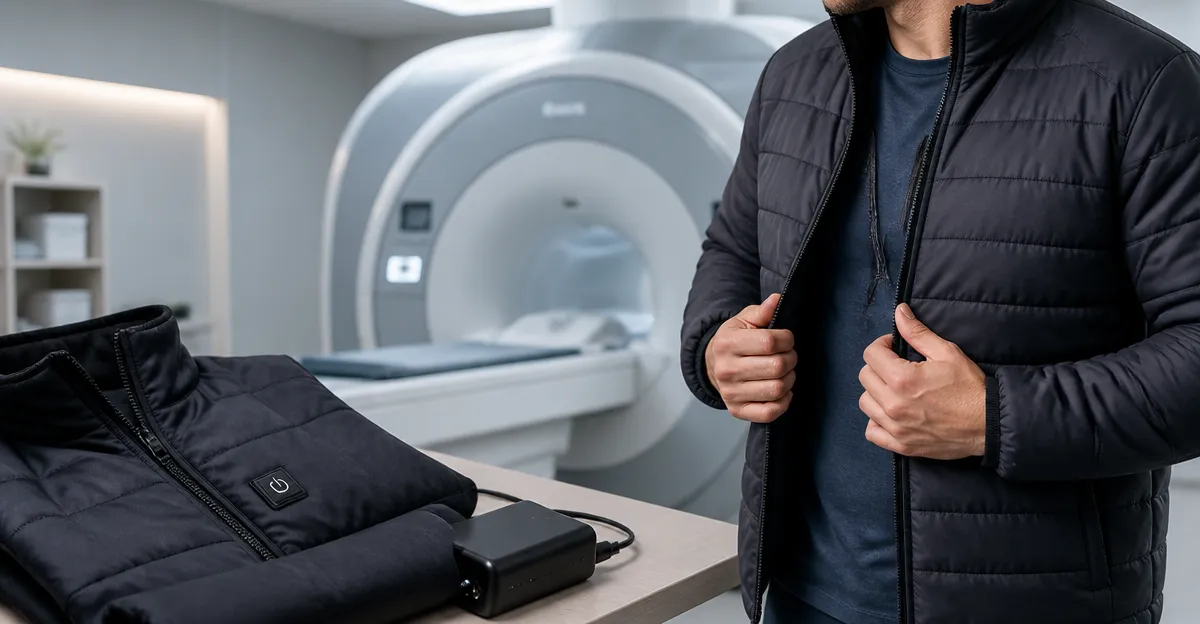
The magnetic resonance imaging (MRI) environment imposes strict safety rules because the scanner generates a powerful static magnetic field, rapidly changing gradients, and radio‑frequency energy. Many patients and outdoor enthusiasts wonder whether their battery‑powered heated garments, such as heated hoodies or thermal underwear, can be worn safely during an MRI exam. This guide explains the scientific basis of MRI safety, outlines the specific hazards posed by battery‑heated clothing, and provides actionable recommendations for patients, clinicians, and product designers. Readers will leave with a clear understanding of what is permitted, which products are unsuitable, and which alternatives can keep the body warm without compromising imaging quality.
Background and Context
Magnetic resonance imaging relies on a superconducting magnet that creates a static field typically ranging from 1.5 to 3.0 tesla, far stronger than ordinary household magnets. Any ferromagnetic material placed within the scanner bore can become a projectile, while conductive loops can induce currents that generate heat or cause image artifacts. Battery‑heated clothing incorporates electrical components—lithium‑ion cells, heating elements, wiring, and sometimes metal fasteners—that may interact with the magnetic field in unpredictable ways. Understanding the classification system used by the American College of Radiology (ACR) and the International Electrotechnical Commission (IEC) helps to assess whether a specific garment is MRI‑conditional, safe, or prohibited.
Key Concepts for Evaluating Heated Apparel
Three technical factors determine MRI compatibility:
- Magnetic susceptibility: Materials that are strongly attracted to magnetic fields (e.g., steel) can become dangerous projectiles.
- Electrical conductivity: Conductive loops can act as antennas, picking up radio‑frequency energy and heating tissue.
- Battery chemistry: Lithium‑ion cells may contain ferromagnetic components in their casings or connectors, and they are sensitive to high magnetic fields that can cause internal short circuits.
Manufacturers typically label products as "MRI‑safe" only after rigorous testing. In the absence of such labeling, the default assumption must be that the item is not safe for the MRI environment.
Product Recommendations for Warmth Outside the Scanner
While heated garments should be removed before entering the MRI suite, they can be valuable for pre‑scan warming, post‑scan recovery, or use in other cold‑weather activities. The following products are highlighted for their performance, safety features, and user feedback. The first mention of each product includes a friendly anchor link to the Amazon listing.
Heated Thermal Underwear Set
This 42‑zone electric top and pant set provides full‑body warmth for activities such as hunting, dog‑walking, and shoveling. It includes a rechargeable battery pack that powers the heating elements for up to eight hours, and the garment is constructed from moisture‑wicking fabric to keep the skin dry. Although the product offers extensive coverage, it contains multiple metal connectors and a sizable lithium‑ion battery, making it unsuitable for MRI use. Users should remove the set before any imaging procedure.
CYCYHEAT Heated Underwear
The CYCYHEAT set features an upgraded 7.4 V, 2‑piece battery pack and elastic thermal fabric designed for both men and women. Its lightweight construction and discreet heating zones make it popular for outdoor sports. Like the previous set, the battery pack contains ferromagnetic components, and the heating wires are conductive; therefore, it must be taken off before entering the MRI room.
DR.PREPARE Heated Hooded Vest
The DR.PREPARE hooded vest is a unisex, USB‑powered garment with three heating levels and ten heating zones. Its lightweight design and removable USB power bank make it convenient for hikers and construction workers. The USB power bank is not MRI‑compatible, and the vest’s metallic zippers can become projectiles. It is recommended only for use outside the scanner.
Loowoko Heated Hoodie
The Loowoko Heated Hoodie includes a 10,000 mAh power bank that delivers 5 V 3 A output, dual USB ports, and six heating zones. It is rated 4.1/5.0 from 170 reviews and costs $89.99. The product’s description emphasizes safety features such as over‑current and over‑heat protection, yet the power bank’s lithium‑ion cells remain a magnetic hazard. Consequently, the hoodie should be removed before any MRI scan.
DR.PREPARE Heated Vest
This vest offers ten heating zones, three temperature settings, and an adjustable fit for sizes L‑XL. The battery pack is sold separately, but the vest’s internal wiring and metal snaps still pose a risk in the MRI environment. Patients should store the vest in a non‑magnetic locker while undergoing imaging.
Comparison and Selection Guide
When choosing a heated garment for outdoor use, consider the following criteria:
| Product | Heating Zones | Power Source | Battery Life (hrs) | Price (USD) | User Rating |
|---|---|---|---|---|---|
| Heated Thermal Underwear Set | 42 | Integrated rechargeable pack | ~8 | Not listed | Not listed |
| CYCYHEAT Heated Underwear | Multiple (unspecified) | 7.4 V 2‑piece pack | ~6‑7 | Not listed | Not listed |
| DR.PREPARE Heated Hooded Vest | 10 | USB power bank (sold separate) | ~6 | Not listed | Not listed |
| Loowoko Heated Hoodie | 6 | 10,000 mAh power bank | ~8 | 89.99 | 4.1/5 (170 reviews) |
| DR.PREPARE Heated Vest | 10 | USB power bank (not included) | ~5‑6 | Not listed | Not listed |
For patients who need warmth before an MRI, the Loowoko Heated Hoodie offers the best balance of price, user rating, and safety features, provided it is removed before scanning. For extended outdoor activities, the Heated Thermal Underwear Set provides the most comprehensive coverage but requires careful management of its larger battery pack.
Best Practices & Tips for MRI Safety with Heated Clothing
- Remove all battery‑powered garments before entering the scanner room. Store them in a designated non‑magnetic locker or a metal‑free bag.
- Check the manufacturer’s labeling. Only items explicitly marked "MRI‑safe" may be considered for use inside the magnet room.
- Inform the technologist. If you are wearing heated clothing for post‑scan comfort, let the staff know so they can verify that the item is completely removed.
- Use alternative warming methods. Warm blankets, forced‑air heaters, and passive insulation (e.g., fleece layers) are MRI‑compatible and widely available in imaging centers.
- Inspect battery packs for damage. Swollen or leaking lithium‑ion cells pose additional fire hazards, even outside the scanner.
- Plan ahead. If you anticipate a long waiting period before the scan, pre‑warm your body with a heated garment, then change into hospital‑provided attire before the procedure.
Frequently Asked Questions
1. Can I wear a heated hoodie during an MRI if the battery is removed?
Even without the battery, many heated garments contain metallic threads, zippers, or heating elements that remain conductive. The safest approach is to remove the entire garment.
2. Are there any MRI‑compatible heated garments?
Currently, no major manufacturer offers a heated clothing line that has undergone formal MRI‑conditional testing. Some research institutions are developing fiber‑optic heating systems that avoid metal, but they are not yet commercially available.
3. What happens if a battery‑heated item is accidentally left inside the scanner?
The ferromagnetic components can become projectiles, potentially damaging the scanner and injuring staff. Additionally, the battery may overheat, creating a fire risk.
4. How long can I keep a heated garment on after the scan?
Once you exit the magnet room, you may re‑don the garment if you have removed the battery pack and the device is in good condition. Many facilities provide warming blankets to avoid the need for personal heated clothing.
5. Does the MRI’s radio‑frequency field affect battery performance?
High‑frequency RF pulses can induce currents in conductive loops, potentially causing the battery to discharge rapidly or overheat. This is another reason why batteries are prohibited inside the scanner.
6. Are there any non‑electrical ways to stay warm during an MRI?
Yes. Wearing multiple layers of non‑metallic clothing, such as thermal base layers and fleece mid‑layers, provides effective insulation without interfering with the magnetic field.
Conclusion
Battery‑heated clothing offers valuable warmth for outdoor enthusiasts, but it is incompatible with the MRI environment due to ferromagnetic components, conductive heating elements, and lithium‑ion batteries. Patients should always remove such garments before scanning, rely on MRI‑approved warming methods, and inform technologists of any concerns. By following the best‑practice checklist and selecting appropriate non‑magnetic alternatives, individuals can maintain comfort while preserving the safety and image quality of the MRI procedure.
Products Featured in This Guide
Heated Thermal Underwear Set
Price: Not listed | Rating: Not listed
Featured for its extensive 42‑zone heating system, illustrating why high‑zone garments are unsuitable for MRI due to numerous metal components.
CYCYHEAT Heated Underwear
Price: Not listed | Rating: Not listed
Highlighted for its lightweight battery pack and elastic fabric, showing the trade‑off between comfort and MRI safety.
DR.PREPARE Heated Hooded Vest
Price: Not listed | Rating: Not listed
Chosen for its USB‑powered design and three heating levels, demonstrating why removable power sources are still prohibited.
Loowoko Heated Hoodie
Price: $89.99 | Rating: 4.1/5 (170 reviews)
Featured for its high user rating and detailed safety specifications, serving as a practical example of a well‑reviewed heated garment that must still be removed before MRI.
DR.PREPARE Heated Vest
Price: Not listed | Rating: Not listed
Included to illustrate a vest with ten heating zones, emphasizing the importance of removing garments with multiple conductive pathways before MRI.