Introduction
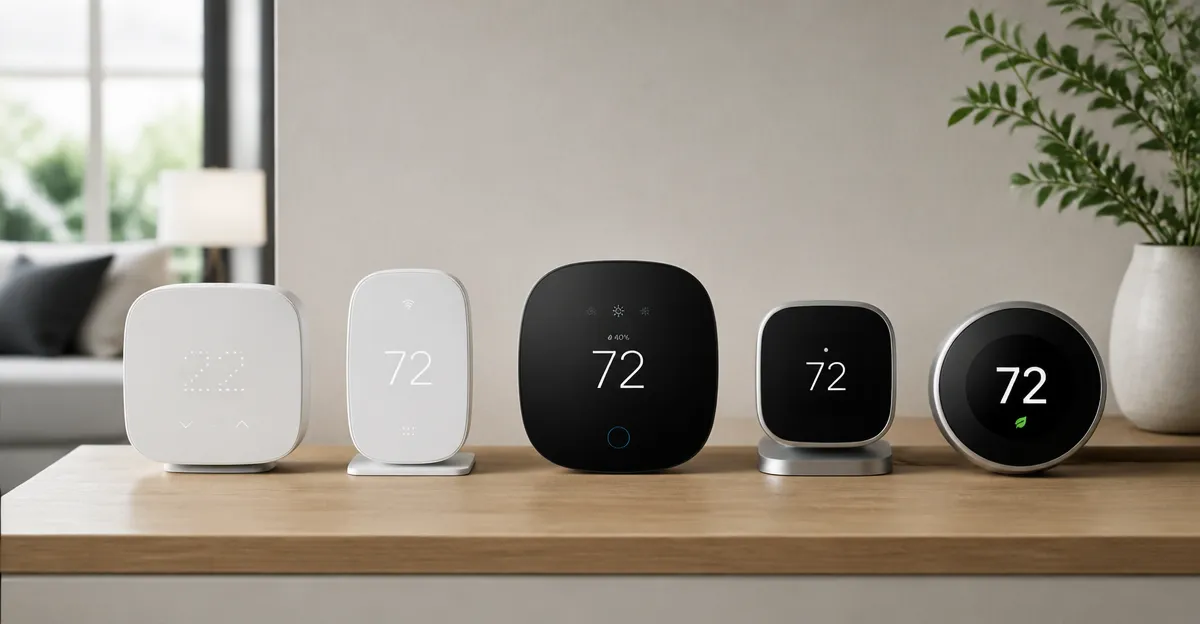
Smart thermostats have become a cornerstone of modern energy management. They enable precise temperature control, remote scheduling, and integration with voice assistants. This article compares five popular Amazon‑available models: Mysa Smart Thermostat V2, Sensi Smart Thermostat ST55, ecobee Smart Thermostat Premium, Aqara Smart Thermostat W200, and Google Nest Thermostat. Understanding the differences helps consumers select the device that best matches their heating system, budget, and smart‑home ecosystem.
Individual Product Overviews
Mysa Smart Thermostat V2
Mysa is engineered for high‑voltage electric baseboard heaters and fan‑forced units. It supports 120‑240 V loads up to 1900 W at 120 V or 3800 W at 240 V, and requires at least four wires, including a neutral. The device features a 40 % smaller form factor, adaptive brightness, and integration with Alexa, Google Assistant, and Apple HomeKit. Reviewers praise its sleek design and the ability to modulate voltage rather than simple on/off control, noting up to 25 %‑40 % energy savings in multi‑zone installations. One reviewer wrote, "The units can be operated manually, or you can set up a schedule on the app. The scheduling is as granular as you want to make it." The price is $144.99 and it holds a 4.5‑star rating from 1,294 reviews.
Sensi Smart Thermostat ST55
Sensi, manufactured by Emerson, targets low‑voltage HVAC systems and emphasizes privacy, stating that personal data will not be sold. It offers easy DIY installation with a built‑in level, and typically does not require a C‑wire. ENERGY STAR certification promises about 23 % energy savings. Users highlight the intuitive app, especially the ability to copy schedules across days. A reviewer noted, "The app interface was SO VERY EASY! It allows you to copy previous schedules or to create new based on existing schedules." The unit costs $114.99 and carries a 4.4‑star rating from 23,040 reviews.
ecobee Smart Thermostat Premium
Ecobee Premium combines a premium metal finish with a built‑in smart speaker, air‑quality sensor, and optional SmartSensor for room‑by‑room control. ENERGY STAR certification claims up to 26 % savings. The thermostat supports Siri, Alexa, and a radar‑based occupancy sensor that pre‑heats or pre‑cools based on presence. Reviewers appreciate the accuracy of temperature readings and the ability to manage multiple sensors, though some note challenges with outdoor weather data in rural areas. The price is $245.00 and it has a 4.3‑star rating from 4,156 reviews.
Aqara Smart Thermostat W200
Aqara W200 is positioned as an Apple‑centric device with Adaptive Temperature, Clean Energy Guidance, and Matter 1.4 compatibility. It includes a 4‑inch full‑color touchscreen, built‑in mmWave radar for precise presence detection, and a built‑in Zigbee/Thread hub. The thermostat works with about 85 % of HVAC systems and offers a C‑wire adapter for those without one. Users commend the seamless Apple Home integration and the device’s role as a hub for other Aqara products. One reviewer stated, "Installation was super simple, and if you have ever messed with installing a thermostat you won’t find any surprises." The price is $159.99 with a 4.2‑star rating from 229 reviews.
Google Nest Thermostat
Google Nest offers a budget‑friendly smart thermostat with learning algorithms that adjust temperature based on occupancy. It works without a C‑wire in many installations, though some systems still require one. ENERGY STAR certification is highlighted, and the device integrates with Google Assistant, Alexa, and Matter‑compatible assistants. Reviewers mention a straightforward design but note occasional reliance on a stable internet connection. A user wrote, "It effectively regulated the temperature in both my upstairs and downstairs areas, providing a comfortable environment throughout my home." The price is $114.38 and it holds a 4.1‑star rating from 29,615 reviews.
Head‑to‑Head Comparison
Price and Value
- Mysa V2 ($144.99) sits in the mid‑range, offering high‑voltage capability at a lower price than ecobee.
- Sensi ST55 ($114.99) is the most affordable, targeting conventional low‑voltage HVAC.
- Ecobee Premium ($245.00) is the premium price point, justified by its speaker, air‑quality sensor, and optional SmartSensors.
- Aqara W200 ($159.99) provides a balance of Apple‑centric features and hub functionality for a modest premium.
- Google Nest ($114.38) matches Sensi on price while adding learning algorithms.
Features and Specifications
| Mysa V2 | Sensi ST55 | Ecobee Premium | Aqara W200 | Google Nest |
|---|---|---|---|---|
| Supports 120‑240 V electric baseboards (up to 3800 W) | Works with most 24 V HVAC; C‑wire optional | 24 V systems; includes Power Extender Kit | 85 % HVAC compatibility; optional C‑wire adapter | Works without C‑wire in many cases |
| Adaptive Brightness & Sleep/Wake on Approach | Physical buttons; no touchscreen | 4‑inch color display, built‑in speaker | 4‑inch full‑color touchscreen, mmWave radar | Familiar circular dial, learning algorithm |
| Apple HomeKit, Alexa, Google Assistant | Alexa, Google Assistant, Apple Home (via bridge) | Siri, Alexa, Google Assistant, optional doorbell camera | Apple Home, Google Home, Alexa, Matter, Zigbee/Thread hub | Google Assistant, Alexa, Matter |
| Humidity sensor, voltage modulation | Energy usage reports, privacy protection | Air‑quality monitor, occupancy radar, SmartSensors | Adaptive Temperature, Clean Energy Guidance | Learning schedule, Savings Finder |
| Premium touchscreen | Physical buttons + app control | Premium metal finish, speaker | Elegant curved glass, hub integration | Minimalist design, no screen |
Customer Ratings and Feedback
All five products maintain strong ratings above 4.0. Mysa leads with 4.5 stars, praised for solid build quality and precise voltage control. Sensi’s 4.4‑star rating reflects its ease of installation; one reviewer described the process as "Easy peasy to insert each wire." Ecobee’s 4.3 stars come with mixed feedback: accuracy is lauded, yet some rural users report outdoor temperature mismatches. Aqara’s 4.2 stars highlight Apple ecosystem integration, though a few users note occasional connectivity hiccups with Apple Home. Google Nest’s 4.1 stars show overall satisfaction but also note the need for a C‑wire in certain setups and occasional internet‑dependency issues.
Performance and Reliability
Mysa’s voltage‑modulating technology delivers smoother temperature gradients, which reviewers attribute to "MUCH more evenly heated rooms." Sensi’s reliability stems from its simple hardware and clear app guidance, though battery life can be a concern; a reviewer replaced 70 % charged AA batteries with rechargeables. Ecobee’s multi‑sensor approach offers room‑level precision, yet the outdoor weather algorithm can be inaccurate in remote locations, as one user reported a 15‑degree error. Aqara’s mmWave radar provides rapid presence detection, and its Matter‑based local control reduces latency. Google Nest’s learning algorithm adapts over weeks; however, users have reported occasional connectivity failures that affect schedule execution.
Best Use Cases
- Mysa V2: Ideal for homes with electric baseboard or fan‑forced heaters that require high‑voltage support.
- Sensi ST55: Suitable for conventional low‑voltage HVAC systems where a simple, privacy‑focused solution is desired.
- Ecobee Premium: Best for occupants who want whole‑home comfort, air‑quality monitoring, and optional smart‑camera integration.
- Aqara W200: Perfect for Apple Home users seeking Adaptive Temperature and a built‑in hub for Zigbee/Thread devices.
- Google Nest: Fits budget‑conscious consumers who appreciate learning schedules and Google ecosystem integration.
Pros & Cons
Mysa Smart Thermostat V2
- Pros: High‑voltage compatibility, adaptive display, strong HomeKit/Google/Alexa integration, precise voltage modulation.
- Cons: Requires four wires, no Celsius/Fahrenheit toggle in early firmware (now fixed), higher price than basic low‑voltage models.
Sensi Smart Thermostat ST55
- Pros: Affordable, privacy‑first, easy DIY install, no C‑wire in most cases, clear scheduling UI.
- Cons: Relies on AA batteries, no built‑in speaker or air‑quality sensor, limited advanced occupancy features.
ecobee Smart Thermostat Premium
- Pros: ENERGY STAR certified, SmartSensors for room‑by‑room control, air‑quality monitor, built‑in speaker, extensive integration.
- Cons: Higher cost, complex outdoor weather algorithm for some regions, installation may require additional wiring.
Aqara Smart Thermostat W200
- Pros: Apple Adaptive Temperature, Matter local control, built‑in Zigbee/Thread hub, mmWave radar for precise presence detection.
- Cons: Requires Apple Home hub for full features, C‑wire adapter sold separately, fewer third‑party integrations beyond Matter.
Google Nest Thermostat
- Pros: Learning algorithm, budget‑friendly, works without C‑wire in many cases, Google Home integration.
- Cons: Dependent on stable internet, occasional accuracy complaints, limited physical controls.
Recommendations
For homeowners with electric baseboard heating, Mysa Smart Thermostat V2 offers the most appropriate voltage handling and energy‑saving modulation. Those with standard low‑voltage HVAC seeking a cost‑effective, privacy‑aware solution should consider Sensi Smart Thermostat ST55. If multi‑room comfort, air‑quality monitoring, and optional doorbell integration are priorities, ecobee Smart Thermostat Premium is the premium choice. Apple‑centric households will benefit most from Aqara Smart Thermostat W200, especially those who already own Aqara devices. Finally, budget‑focused users who prefer Google’s ecosystem should select Google Nest Thermostat for its learning capabilities and easy installation.
FAQ
- Can Mysa control low‑voltage HVAC systems?
- No. Mysa is designed exclusively for high‑voltage electric baseboard or fan‑forced heaters.
- Does Sensi require a C‑wire?
- In most installations Sensi works without a C‑wire, using power‑stealing technology, though a dedicated C‑wire can improve stability.
- How many external sensors does ecobee Premium support?
- Ecobee includes one SmartSensor in the box and supports up to 32 additional sensors for temperature, occupancy, and humidity.
- What is Apple Adaptive Temperature?
- Adaptive Temperature uses the iPhone or Apple Watch location data to adjust the thermostat automatically based on home, away, sleep, and extended‑away states.
- Will Google Nest work with a heat pump that has auxiliary heat?
- Yes, but the Nest may need a C‑wire for reliable power, and users should verify compatibility with the Nest Compatibility Checker.
- Do any of these thermostats require a subscription for advanced features?
- Ecobee offers optional Ecobee Smart Security subscription for advanced security alerts; all other devices provide core features without recurring fees.
- Which thermostat offers the best battery life?
- Sensi relies on AA batteries and may need replacement; Mysa, Ecobee, Aqara, and Nest are all powered directly from the HVAC system and do not use replaceable batteries.
Conclusion
Each thermostat excels in a particular niche. Mysa V2 dominates the high‑voltage electric heating market, while Sensi delivers the most economical solution for traditional low‑voltage systems. Ecobee Premium provides the richest feature set for users who value air quality and room‑level control. Aqara W200 stands out for Apple Home users and those who desire a built‑in smart‑home hub. Google Nest offers a balanced, learning‑based experience at the lowest price point. The final recommendation depends on the heating infrastructure, ecosystem preference, and budget.
Products Mentioned in This Review
Frequently Asked Questions
Which smart thermostat among Mysa, Sensi, Ecobee, Aqara, and Nest works best with electric baseboard heating?
Mysa Smart Thermostat V2 is specifically designed for electric baseboard and line‑set heating, making it the top choice for that system.
Do all five thermostats support Amazon Alexa and Google Assistant?
Yes, each model integrates with both Alexa and Google Assistant for voice‑controlled temperature adjustments.
How does the Ecobee Premium’s sensor technology differ from the Nest Thermostat’s?
Ecobee Premium includes remote room sensors that detect temperature and occupancy, while Nest relies on a single built‑in sensor for whole‑home readings.
Is professional installation required for the Aqara Smart Thermostat W200?
Aqara W200 can be self‑installed by most homeowners, but a licensed electrician is recommended for complex HVAC setups.
Which thermostat offers the most advanced energy‑saving algorithms?
Ecobee Smart Thermostat Premium uses adaptive learning and occupancy detection, providing the most sophisticated energy‑saving automation among the five.