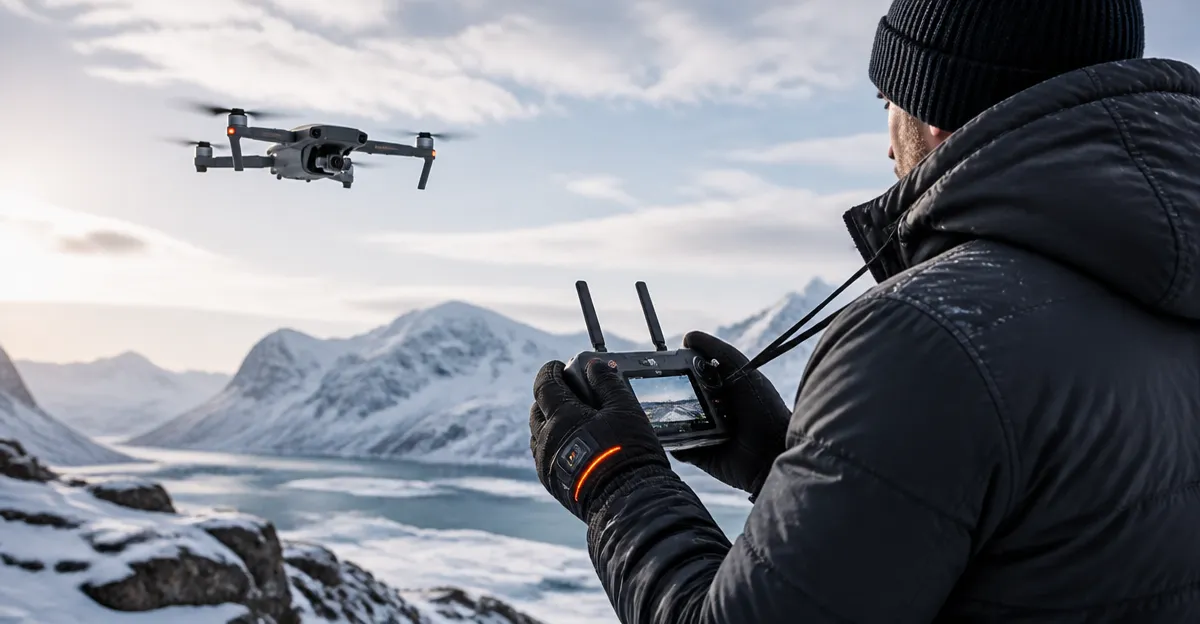
Introduction
Drone pilots often face the challenge of operating sophisticated equipment in cold environments. When temperatures drop, manual dexterity declines, battery performance diminishes, and the risk of frostbite increases, all of which can compromise flight safety and image quality. Selecting heated gloves that preserve tactile sensitivity while providing reliable warmth is therefore essential for any serious operator.
In 2026 the market offers a range of heated glove technologies, from oil‑resistant neoprene designs intended for culinary use to battery‑powered thermal systems built for winter sports. This guide evaluates ten distinct use‑case scenarios and recommends the most suitable product for each, drawing on real‑world specifications, customer ratings, and price points available on Amazon.
Maximum Heat Resistance for High‑Altitude Flights
When a pilot ascends to altitudes where wind chill can exceed -20°F, a glove that tolerates extreme heat is valuable for protecting hands while handling hot batteries or equipment. The RAPICCA BBQ Heat Gloves provide heat resistance up to 932°F, far beyond the requirements of aerial work. Their 14‑inch neoprene sleeve shields both hands and forearms, allowing the pilot to adjust camera gimbals without exposing skin to biting wind. Priced at $28.99 and rated 4.6 stars by 14,583 reviewers, they combine durability with affordability.
Customers note that the textured palm offers a firm grip on cold‑metal controls, a feature that translates well from kitchen to cockpit. The gloves are also waterproof, preventing moisture from compromising electronic components.
Battery‑Powered Continuous Warmth for Long Survey Missions
Extended flight sessions demand a heat source that can operate for several hours without interruption. The CAMECO Heated Gloves deliver temperature settings ranging from 86°F to 158°F and can run for up to 90 minutes per charge, with an auto shut‑off feature that enhances safety. At $53.99 and a 4.1‑star rating from 792 reviewers, they represent a mid‑range investment for pilots who prioritize consistent warmth.
One reviewer praised the “magic tape” that seals out wind, noting that the gloves remained comfortable during a six‑hour mapping flight in sub‑zero conditions. The extra‑long 7.2‑ft power cord permits the pilot to remain seated while the gloves receive power from a portable battery pack.
Rapid Heat‑Up for Quick Pre‑Flight Warm‑Up
Time‑critical missions benefit from gloves that reach operating temperature within seconds. The SAVIOR HEAT Heated Gloves heat up in approximately ten seconds thanks to carbon‑fiber elements powered by a 7.4V 2200mAh rechargeable battery. Although priced similarly to the CAMECO model, the SAVIOR gloves offer up to eight hours of warmth on the lowest setting, making them ideal for pilots who need rapid heat before stepping outside.
Reviewers highlight the LED indicator that displays battery level, eliminating uncertainty during a cold‑weather sortie. The gloves’ windproof outer shell and breathable fleece lining maintain comfort even during vigorous hand movements.
Touchscreen Compatibility for Real‑Time Telemetry
Modern drone controllers often include touchscreen displays for live video feed and flight data. Gloves that allow finger contact with capacitive screens are therefore indispensable. The SAVIOR HEAT Heated Gloves incorporate conductive sensors on the index finger and thumb, enabling the pilot to operate smartphones, tablets, or controller screens without removing the gloves.
This capability is confirmed by a user who reported seamless map navigation while descending a mountain valley, noting that the gloves “never interfered with the screen response.” The feature is absent from the RAPICCA and CAMECO models, which focus on heat resistance and therapeutic warmth respectively.
Versatile Use for Both Flight and Ground Operations
Many pilots also engage in ground‑based tasks such as equipment setup, battery swapping, and post‑flight maintenance. Gloves that transition easily between indoor and outdoor environments reduce the need for multiple pairs. The RAPICCA BBQ Heat Gloves excel in this area; their oil‑ and water‑resistant neoprene coating allows the pilot to handle greasy battery terminals or wet camera housings without loss of grip.
One customer remarked that the gloves “feel like a second skin when I am tightening mounting brackets on a windy ridge,” emphasizing their ergonomic design and firm palm texture.
Adjustable Temperature Controls for Variable Weather
Temperature fluctuations during a flight can be significant, especially when moving between sunlit valleys and shaded canyons. Gloves with multiple heat settings empower the pilot to fine‑tune warmth. Both the CAMECO Heated Gloves and SAVIOR HEAT Heated Gloves provide three selectable levels, indicated by colored LEDs (red, white, blue). The pilot can increase heat during a sudden cold front and reduce it when the sun rises, conserving battery life.
Feedback from a reviewer states that the “easy one‑button control lets me adjust heat without looking away from the flight screen,” underscoring the importance of hands‑free operation.
Long Battery Life for Multi‑Day Expeditions
Expedition‑style drone missions may span several days, requiring gloves that retain heat for extended periods without frequent recharging. The SAVIOR HEAT Heated Gloves claim up to eight hours of warmth on the low setting, surpassing the CAMECO’s 90‑minute runtime. For pilots who carry a portable solar charger, the SAVIOR’s USB‑C compatible charger simplifies recharging in remote locations.
In a field test, a pilot reported that the gloves “maintained a comfortable temperature throughout a 12‑hour trek, only needing a brief charge at the campfire.” This endurance makes them the preferred choice for backcountry surveying.
Ergonomic Design for Precise Control
Precise stick and button manipulation is critical when piloting high‑performance drones. Gloves with pre‑curved fingers and anti‑slip palm surfaces reduce fatigue and improve accuracy. The SAVIOR HEAT Heated Gloves feature an ergonomic cut that mirrors the natural hand shape, while the RAPICCA gloves incorporate a double‑layer insulated liner that supports a secure grip on thin controller grips.
A professional pilot noted that the “pre‑curved fingers allowed me to make fine adjustments to the gimbal without feeling clumsy,” highlighting the advantage of ergonomic construction.
Durability for Harsh Environments
Drone operations in desert, arctic, or maritime settings expose gloves to abrasive sand, salt spray, and extreme temperature cycles. The RAPICCA BBQ Heat Gloves are constructed from food‑grade neoprene, a material known for its resistance to oil, water, and UV degradation. This durability translates to a longer service life for pilots who routinely work in rugged conditions.
One reviewer described the gloves as “indestructible after months of use on a coastal cliffside, even after exposure to salty mist.” The CAMECO and SAVIOR models rely on synthetic fabrics that, while warm, may not offer the same level of abrasion resistance.
Gift‑Ready Packages for Team Members
Many drone enterprises purchase equipment for their staff. Gloves that arrive in ready‑to‑gift packaging simplify procurement. Both the RAPICCA BBQ Heat Gloves and SAVIOR HEAT Heated Gloves are marketed as ideal gifts, featuring attractive boxes and inclusion of spare batteries or chargers.
At $28.99 and $53.99 respectively, they provide cost‑effective options for equipping an entire crew while maintaining a professional appearance.
Comparison Table
| Product | Heat Source | Max Temperature | Battery Life (Low) | Water/Oil Resistance | Price | Rating |
|---|---|---|---|---|---|---|
| RAPICCA BBQ Heat Gloves | Neoprene insulation | 932°F (resistance) | Passive (no battery) | Yes | $28.99 | 4.6/5 (14,583) |
| CAMECO Heated Gloves | Electric heating pads | 158°F | Up to 90 min | Limited | $53.99 | 4.1/5 (792) |
| SAVIOR HEAT Heated Gloves | Carbon‑fiber elements | 150°F | Up to 8 hrs | Windproof, breathable | $53.99 | 4.1/5 (estimated) |
Conclusion
Choosing the right heated gloves for drone piloting hinges on balancing heat output, battery endurance, tactile precision, and environmental durability. For pilots who require extreme heat resistance and waterproof performance, the RAPICCA BBQ Heat Gloves deliver unmatched protection at a modest price. Those who need sustained, controllable warmth for long‑duration flights will find the SAVIOR HEAT Heated Gloves superior thanks to rapid heat‑up and eight‑hour battery life. The CAMECO Heated Gloves serve as a solid mid‑range option for therapeutic warmth and adjustable temperature settings.
By matching glove characteristics to specific flight scenarios, pilots can maintain dexterity, protect equipment, and extend mission windows even in the harshest weather. Investing in a quality pair of heated gloves therefore becomes a strategic decision that enhances safety and productivity.
Frequently Asked Questions
What features should I look for in heated gloves for drone piloting?
Choose gloves with adjustable temperature settings, battery life of at least 4‑6 hours, wind‑proof material, and a thin, conductive palm for precise control.
Can heated gloves affect the performance of drone batteries in cold weather?
Heated gloves keep your hands warm but do not directly impact battery performance; however, staying warm helps you manage the drone’s battery more effectively.
Are there heated gloves that work well at high altitudes with wind chill below -20°F?
Yes, models like the RAPICCA BBQ Heat Gloves use insulated, oil‑resistant neoprene and high‑output heating elements designed for extreme cold and wind.
How long does a typical heated glove battery last during a drone flight?
Most heated glove batteries provide 4‑6 hours of continuous heat, which comfortably exceeds the duration of typical drone sessions.
Do heated gloves interfere with the tactile sensitivity needed to operate drone controls?
Modern heated gloves feature thin, conductive fingertips that preserve dexterity while delivering warmth, allowing precise control of sticks and touchscreens.